Does Your Reading Speed Affect How Dense Your Prose Is? A Deep Dive for Serious Writers
MyAuthorVoice Editorial
Writing craft & author identity
While your personal reading speed doesn't directly dictate the inherent density of your prose, the *awareness* of how readers process text—and the varying speeds at which they do so—profoundly influences a writer's choices regarding sentence structure, vocabulary, and conceptual complexity. Understa
Does Your Reading Speed Affect How Dense Your Prose Is? A Deep Dive for Serious Writers
While your personal reading speed doesn't directly dictate the inherent density of your prose, the awareness of how readers process text—and the varying speeds at which they do so—profoundly influences a writer's choices regarding sentence structure, vocabulary, and conceptual complexity. Understanding this dynamic allows you to intentionally craft prose that aligns with your artistic vision and desired reader experience, rather than accidentally producing text that is either overly simplistic or unnecessarily opaque.
Table of Contents
- The Nuance of Density: Beyond Simple Word Count
- How Reader Processing Speed Shapes Writerly Choices
- Intentional Density: A Framework for Crafting Impactful Prose
- The Spectrum of Prose: From Accessible to Demanding
- Tools and Techniques for Managing Prose Density
- The Role of Voice and Vision in Density Decisions
- Refining Your Craft: Practical Steps for Self-Assessment
The Nuance of Density: Beyond Simple Word Count
When we speak of "dense prose," it's easy to fall into the trap of equating it solely with long sentences or complex vocabulary. While these elements can certainly contribute, true prose density is a far more intricate concept, encompassing the intellectual and emotional effort required for a reader to fully absorb and integrate the information, ideas, or sensations presented. It's not just about how many words are on the page, but how much meaning is packed into each word, phrase, and paragraph, and how quickly that meaning can be unpacked by the reader.
Consider, for instance, a passage from a philosophical treatise compared to a descriptive scene in a children's book. Both might use sentences of varying lengths, but the philosophical text is inherently denser because it demands a higher degree of abstract thought, critical analysis, and often, prior knowledge. The density stems from the conceptual load, the layers of implication, the intertextual references, and the subtle logical leaps the reader is expected to make. Conversely, a children's book aims for clarity and immediate comprehension, even if it uses evocative language. The density here is low, designed for rapid processing and emotional engagement without intellectual strain.
This distinction is crucial for serious writers. Your personal reading speed, whether you devour books in hours or savor them over weeks, primarily reflects your individual cognitive processing habits, vocabulary breadth, and familiarity with different genres and styles. It might influence what you find dense or accessible as a reader, but it doesn't automatically translate into the density of your own writing. What it does influence is your perception of how your writing will be received. If you are a fast, highly analytical reader, you might inadvertently assume your audience shares your processing capabilities, leading you to craft prose that is denser than intended for a broader readership. Conversely, a slower, more deliberate reader might overcompensate, simplifying their prose to a degree that undermines its potential depth or sophistication.
Ultimately, understanding prose density requires moving beyond superficial metrics. It's about the cognitive friction a reader encounters, the mental energy expended to grasp the full scope of your message. This friction can be intentional, serving an artistic purpose, or unintentional, acting as a barrier to understanding. The goal is not to eliminate density entirely, but to control it, to wield it as a deliberate tool in your authorial arsenal, ensuring it serves your narrative or argumentative aims rather than hindering them. This conscious control is a hallmark of a mature and self-aware writer, someone who understands their creative identity and the impact of their writing architecture, insights often illuminated through an author voice platform like MyAuthorVoice.
How Reader Processing Speed Shapes Writerly Choices
The way readers process information, particularly the speed at which they do so, doesn't directly dictate the density of your prose, but it profoundly influences the choices you make as a writer. Think of it as a feedback loop: your understanding of diverse reader speeds informs your craft, and your craft, in turn, shapes the reader's experience. A writer who is acutely aware that some readers skim, others savor, and many fall somewhere in between, will approach sentence construction, paragraph flow, and conceptual pacing with greater intentionality.
For instance, a writer aiming for broad commercial appeal might prioritize clarity and immediacy. They understand that many readers consume fiction rapidly, seeking plot progression and emotional engagement without undue intellectual effort. This awareness might lead to shorter sentences, more direct exposition, and a reduced reliance on complex subordinate clauses or highly abstract vocabulary. The goal is to minimize cognitive friction, allowing the reader to glide through the narrative. Conversely, a literary fiction writer might intentionally employ longer, more intricate sentences and a richer vocabulary, knowing that their target audience often approaches texts with a desire for intellectual engagement and a willingness to spend more time unpacking meaning.
Advertisement
As an Amazon Associate and Bookshop.org affiliate, MyAuthorVoice earns from qualifying purchases at no extra cost to you. Bookshop.org supports independent bookstores.
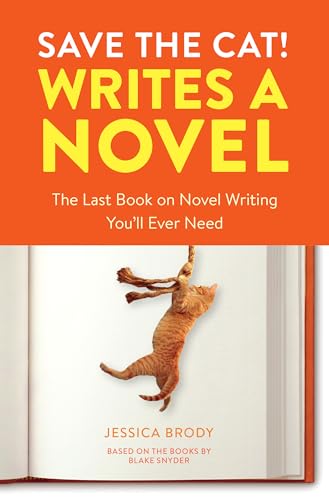
Save the Cat! Writes a Novel
Jessica Brody
The last book on novel writing you'll ever need. Blake Snyder's beat sheet adapted for fiction.
Affiliate link — we may earn a small commission at no extra cost to you.
Sponsored
Frequently Asked Questions
Ready to understand your writing voice?
MyAuthorVoice generates structured reports — Path, Expansion, and Blueprint — that give you a clear picture of your creative identity, thematic range, and writing architecture.
Keep reading
Advertisement
Get writing insights in your inbox
New articles on voice, craft, and creative identity — no noise, no upsells.


As an Amazon Associate and Bookshop.org affiliate, MyAuthorVoice earns from qualifying purchases at no extra cost to you. Bookshop.org supports independent bookstores.
Sponsored
This site was created by Manus AI — an autonomous agent that builds full-stack apps, writes content, and runs workflows without writing a single line of code yourself.
Try Manus Free →