How to Find Your Author Voice: A Structured Approach for Serious Writers
MyAuthorVoice Editorial
Writing craft & author identity
Most writing advice tells you to 'just write more' and your voice will emerge. That's not wrong — but it's incomplete. Voice doesn't just emerge from volume. It emerges from pattern recognition, and pattern recognition requires structured reflection.

How to Find Your Author Voice: A Structured Approach for Serious Writers
Every serious writer embarks on a quest, often unspoken, for something deeply personal yet universally resonant: their author voice. It's the unique literary fingerprint that distinguishes your work, the inimitable rhythm and perspective that makes your prose unmistakably yours. If you've ever felt that your writing, while technically sound, lacks a certain spark, a distinctive resonance that truly captivates readers, then you're likely grappling with the elusive nature of voice. This isn't merely about having a style; it's about embodying an authentic presence on the page, a consistent and compelling way of seeing and articulating the world that draws your audience in and keeps them returning. This article will provide you with a structured, actionable framework to help you discover and cultivate your unique author voice, moving beyond vague advice to concrete strategies that empower you to write with unparalleled authenticity and impact. We will delve into self-analysis, thematic exploration, identifying stylistic patterns, and ultimately, crafting a definitive voice statement. Understanding how to find your author voice is not just an artistic endeavor; it's a strategic imperative for building a lasting connection with your readership and establishing your unique place in the literary landscape.
The Foundation – Understanding What Author Voice Truly Is
Before we embark on the journey of discovery, it's crucial to establish a clear understanding of what author voice truly entails. It's a concept often conflated with other literary elements, leading to confusion and hindering its deliberate cultivation. Let's demystify it.
Beyond Style: Defining Author Voice
Many writers mistakenly equate voice with style, genre, or even tone. While these elements are undoubtedly intertwined with voice, they are not one and the same. Style refers to the specific choices you make in language—your sentence structure, vocabulary, use of figurative language. It's the surface-level presentation of your writing. Genre is the category your work falls into (e.g., fantasy, romance, literary fiction). Tone is the attitude conveyed towards the subject matter (e.g., humorous, serious, sarcastic).
Author voice, however, is deeper. It is the sum of your unique perspective, personality, and approach to storytelling. It’s the consistent, underlying presence that permeates all your work, regardless of the specific story or subject. Think of it as the unique way your mind processes and expresses reality through language. It encompasses not just what you say, but how you say it, reflecting your values, beliefs, experiences, and even your subconscious biases. It’s the reason why you can often identify a favorite author’s work even without seeing their name on the cover. For instance, the intricate, philosophical musings of a writer like Ursula K. Le Guin, the sharp, observational wit of a Jane Austen, or the visceral, often unsettling intimacy of a Stephen King—these are not merely styles; they are distinct voices that carry through their diverse bodies of work. Their voice is their signature, their indelible mark on the literary world.
Why Your Author Voice Matters More Than Ever
In today’s crowded literary marketplace, where countless books and articles vie for attention, a strong author voice is no longer a luxury—it’s a necessity. It serves multiple critical functions for both you and your readers:
- Building a Loyal Readership: Readers connect with voices, not just plots or characters. A distinctive voice creates a sense of intimacy and familiarity, fostering a loyal following who trust your perspective and enjoy your particular way of telling stories. They become invested not just in what you write, but in you as the writer.
- Establishing Author Brand and Recognition: Your voice is a cornerstone of your author brand. It makes you memorable and helps you stand out from the sea of other writers. When agents, editors, or readers encounter your work, a strong voice immediately signals professionalism and a unique artistic vision. It’s what makes your work identifiable across different platforms and projects.
- Enhancing the Impact and Memorability of Your Writing: A powerful voice elevates your prose beyond mere information delivery. It imbues your words with emotional depth, intellectual rigor, or captivating charm, making your stories and ideas more impactful and unforgettable. It’s the difference between a story that’s merely read and one that lingers in the mind long after the final page.
- Fostering Authenticity and Confidence: When you write in your true voice, your writing feels more natural, more authentic. This authenticity translates into greater confidence in your craft, allowing you to take risks and explore new creative territories without feeling like you’re imitating someone else.
Section 2: Self-Analysis – Dissecting Your Existing Writing
The most effective way to begin understanding your author voice is to become an astute observer of your own work. Think of yourself as a literary detective, sifting through clues to uncover the patterns that define your unique expression. This isn’t about judgment; it’s about objective analysis.
The Archeological Dig: Gathering Your Literary Artifacts
To conduct a thorough self-analysis, you need a substantial and varied body of work. Don’t limit yourself to just one type of writing. Collect a diverse sample of your past writing—this could include:
- Essays and Articles: Reflect on your analytical and expository voice.
- Short Stories or Novel Excerpts: Examine your narrative and descriptive capabilities.
- Blog Posts or Journal Entries: These often reveal a more informal, unvarnished aspect of your voice.
- Poetry: If applicable, poetry can highlight your rhythmic and metaphorical tendencies.
- Emails or Letters: Even casual correspondence can offer insights into your natural communication style.
The importance of variety here cannot be overstated. A broad spectrum of writing will help you identify consistent patterns that transcend genre or purpose, revealing the core elements of your voice. Aim for at least 5-10 distinct pieces, ideally written over a period of time, to see how your voice has developed and remained consistent.
The Close Reading: Identifying Recurring Patterns
Once you have your collection, it’s time for a close, analytical read. Go through each piece, not for plot or argument, but for the underlying mechanics and stylistic choices. Ask yourself the following questions, taking notes as you go:
- Sentence Structure: Are your sentences predominantly long and complex, weaving intricate ideas together with subordinate clauses? Or are they short, direct, and punchy, favoring impact and clarity? Do you tend to use a mix, and if so, what dictates the variation? Do you favor certain grammatical constructions, such as passive voice (though often advised against, it can be a deliberate stylistic choice) or active voice, inversions, or parallel structures?
- Vocabulary: Do you gravitate towards formal, academic language, or is your lexicon more informal, conversational, or even colloquial? Are there specific words, phrases, or idioms you find yourself using repeatedly? Do you have a penchant for archaic words, scientific terms, or slang? Your word choice reveals much about your intellectual leanings and desired relationship with the reader.
- Pacing and Rhythm: How does your writing flow? Is it consistently fast-paced, driving the reader forward with urgency? Or is it more deliberate, lyrical, and contemplative, inviting the reader to linger? Does your rhythm vary within a piece, and what emotional or narrative purpose does that serve? Read your work aloud to truly grasp its inherent musicality.
- Figurative Language: Do you frequently employ metaphors, similes, personification, or other literary devices? What kind of imagery do you tend to evoke? Are your comparisons grounded in nature, technology, human experience, or something else entirely? The type and frequency of your figurative language can be a strong indicator of your imaginative landscape.
- Point of View: Do you naturally lean towards first-person narratives, offering an intimate, subjective experience? Or do you prefer the broader scope of third-person, either omniscient or limited? How does your chosen point of view affect the reader’s perception of your story and characters? Even in non-fiction, consider the implied point of view you adopt—are you an objective reporter, a passionate advocate, or a reflective guide?
- Dialogue: How do your characters speak? Is their dialogue realistic, mirroring natural conversation with its hesitations and interruptions? Or is it more stylized, poetic, or sparse, serving a specific artistic purpose? Do you use dialogue tags frequently, or do you let the dialogue speak for itself? The rhythm and content of your dialogue are crucial components of your voice.
- Humor/Wit: Is there a consistent thread of humor, irony, or wit in your writing? What form does it take—sarcasm, observational humor, slapstick, dark comedy? Even in serious works, a touch of humor can be a powerful aspect of your voice, offering relief or deeper insight.
- Emotional Resonance: How do you evoke emotion in your readers? Do you rely on vivid descriptions, internal monologue, dramatic action, or subtle suggestion? What emotions do you most often explore, and how do you typically convey them? Your approach to emotionality is a core aspect of your connection with the reader.
As you conduct this close reading, look for patterns that emerge across different pieces. These consistent choices, often made subconsciously, are the bedrock of your author voice. Document them. What are your defaults? What are your tendencies? This self-awareness is the first crucial step in mastering your voice.
Section 3: Thematic Preoccupations – What Drives Your Stories?
Beyond the mechanics of language and narrative, your author voice is profoundly shaped by the ideas and questions that compel you to write. These are your thematic preoccupations—the underlying concerns, philosophies, and human experiences that you repeatedly explore in your work, regardless of the specific plot or setting.
Uncovering Your Core Obsessions
Think beyond the surface-level plot of your stories. What deeper questions are you asking? What universal truths are you wrestling with? Your core obsessions are often rooted in your personal experiences, values, and beliefs. They are the intellectual and emotional engines that power your creative output. Consider:
- Identity: Who are we, truly? How do we form our sense of self? How do external forces shape our identity?
- Loss and Grief: How do individuals cope with profound loss? What does it mean to mourn, and how does it change us?
- Power and Corruption: Who wields power, and how does it affect individuals and societies? What are the moral compromises inherent in its pursuit?
- Justice and Injustice: What does justice look like? How do individuals fight against systemic injustice? What are the consequences of its absence?
- Nature vs. Nurture: To what extent are we products of our environment versus our innate selves?
- Human Connection and Isolation: What are the bonds that unite us, and what forces drive us apart? How do we seek or avoid connection?
- Memory and the Past: How does the past inform the present? How reliable is memory, and how does it shape our understanding of reality?
These are just a few examples, but your unique set of preoccupations will be deeply personal. Reflect on what truly moves you, what keeps you up at night, what questions you find yourself returning to again and again. These are the fertile grounds from which your most authentic voice will spring.
Thematic Consistency and Evolution
Your thematic preoccupations might evolve over time, perhaps shifting in focus or nuance, but they will often retain a core essence. A writer who explores themes of alienation in their early work might later explore themes of belonging, but the underlying interest in human connection (or its absence) remains. This consistency, even with evolution, strengthens your author voice, giving your body of work a cohesive intellectual and emotional landscape. The link between thematic depth and a strong author voice is undeniable; when readers recognize your recurring concerns, they begin to understand your unique perspective on the human condition, which is a hallmark of a truly developed voice.
Section 4: Influences and Inspirations – Shaping Your Literary DNA
No writer exists in a vacuum. Our voices are, in part, a tapestry woven from the threads of those who came before us and those who write alongside us. Understanding your literary lineage is not about imitation, but about conscious assimilation and transformation.
The Mentors on Your Bookshelf
Take stock of the authors whose voices you admire. Why do they resonate with you? Is it their lyrical prose, their incisive wit, their profound empathy, or their unflinching honesty? Go beyond simply enjoying their work; analyze their techniques. What specific elements of their voice captivate you? How do they construct sentences, choose words, develop characters, or convey emotion? By dissecting their craft, you gain valuable insights into the tools you might wish to incorporate into your own repertoire.
For many, a foundational text in understanding the craft and the author behind it is Stephen King’s On Writing: A Memoir of the Craft [1]. King’s voice—direct, conversational, often darkly humorous, and always deeply human—is palpable throughout his advice. He doesn’t just tell you how to write; he shows you through the very act of writing the book. His voice is inseparable from his wisdom, making the learning experience uniquely engaging. If you’re serious about understanding the symbiotic relationship between writer and craft, this book is an invaluable resource. [Amazon Affiliate Link: On Writing by Stephen King (seperts-20)]
Conscious Emulation vs. Authentic Expression
There’s a fine line between learning from others and inadvertently mimicking them. The goal is not to sound exactly like your literary heroes, but to understand how they achieve their effects and then adapt those lessons to your own unique sensibility. Think of it as absorbing influences without losing yourself. Here are some exercises:
- Transcription and Analysis: Choose a paragraph or page from an author you admire. Transcribe it by hand, paying close attention to every word choice, sentence break, and punctuation mark. Then, analyze why they made those choices. How does it contribute to their voice? What can you learn from it?
- Voice Swapping: Take a short piece of your own writing and try to rewrite it in the voice of an author you admire. Then, rewrite it again, consciously stripping away their stylistic tics and searching for your own natural rhythm and phrasing. This exercise helps you identify where your voice diverges.
- Focused Reading: Read with a specific question in mind: “How does this author achieve their unique effect?” This active reading helps you internalize techniques rather than just passively consume content.
Section 5: Crafting Your Voice Statement – Articulating Your Essence
After dissecting your own writing, exploring your thematic preoccupations, and analyzing your influences, you’re ready for a powerful synthesizing step: articulating your author voice in a concise statement. This isn’t a rigid manifesto, but rather a dynamic compass that guides your creative decisions and helps you maintain consistency.
The Purpose of a Voice Statement
A voice statement is a concise declaration of your authorial identity. It’s a tool for clarity, focus, and intentionality. Think of it as your personal mission statement as a writer. It serves several crucial purposes:
- Guiding Your Writing Decisions: When you’re faced with a stylistic choice—a particular word, a sentence structure, a narrative approach—you can refer back to your voice statement. Does this choice align with the essence of your voice? Does it strengthen or dilute it? This helps you make consistent, deliberate choices.
- Maintaining Consistency: Especially important for long-form projects or across a body of work, a voice statement acts as a touchstone, ensuring that your unique authorial presence remains consistent, even as your stories or subjects change.
- Communicating Your Brand: While primarily for your own internal use, a well-defined voice statement can also inform how you talk about your writing to agents, editors, and readers. It helps you articulate what makes your work distinctive.
Components of an Effective Voice Statement
An effective voice statement is typically brief, perhaps one to three sentences, and captures the core elements of your authorial identity. It often includes:
- Perspective: What unique lens do you bring to your stories? Are you an empathetic observer, a cynical commentator, a hopeful visionary, a meticulous researcher? This speaks to your inherent way of seeing the world.
- Purpose: What do you aim to achieve with your writing? Do you seek to entertain, provoke thought, challenge assumptions, illuminate hidden truths, or offer solace? Your purpose is the driving force behind your words.
- Qualities: What adjectives best describe your writing’s inherent characteristics? Think about the patterns you identified in your self-analysis. Is your writing lyrical, gritty, humorous, introspective, sharp, expansive, intimate, challenging, accessible? Choose words that truly capture the feel of your prose.
- Audience: While not always explicitly stated in the voice statement itself, having a clear understanding of who you are writing for implicitly shapes your voice. Are you writing for fellow academics, young adults, a broad general audience, or a niche community? Your intended reader influences your vocabulary, tone, and approach.
Here’s an example of what a voice statement might look like:
"I write evocative literary fiction that explores the quiet complexities of human relationships, using precise language and a deeply introspective perspective to illuminate the universal truths found in everyday moments, aiming to foster empathy and reflection in a thoughtful, discerning readership."
Notice how this statement combines perspective ("deeply introspective perspective"), purpose ("illuminate universal truths," "foster empathy and reflection"), and qualities ("evocative," "precise language," "quiet complexities"). Crafting such a statement requires honest self-assessment and a clear vision for your work.
Iteration and Refinement
Your voice statement is not static; it’s a living document that will evolve as you grow as a writer. As you write more, experiment with different forms, and gain new life experiences, your understanding of your own voice will deepen. Revisit your voice statement periodically—perhaps once a year, or after completing a major project—and refine it. Does it still accurately reflect who you are as a writer? Has your perspective shifted? Have your thematic preoccupations gained new dimensions? Use your voice statement as a compass, guiding your creative journey, rather than a rigid rulebook that stifles experimentation. It should be a source of clarity, not constraint.
Section 6: Cultivating and Protecting Your Voice – Ongoing Practice
Discovering your author voice is a significant achievement, but cultivating and protecting it is an ongoing process. It requires deliberate practice, resilience in the face of feedback, and a continuous engagement with the broader literary world.
The Power of Deliberate Practice
Voice isn’t something you find once and then possess forever; it’s something you continually hone through consistent effort. Just as a musician practices scales and a painter studies light, a writer must engage in deliberate practice to strengthen their voice. This includes:
- Regular Writing: The most fundamental practice. The more you write, the more you inhabit your voice, allowing it to become more natural and fluid. Set aside dedicated time for writing, even if it’s just for short bursts.
- Experimentation: Don’t be afraid to try new forms, genres, or stylistic approaches. Sometimes, stepping outside your comfort zone can reveal new facets of your voice or help you break free from unconscious habits. Write a poem if you usually write prose, or a short story if you typically write essays.
- Seeking Feedback: Share your work with trusted readers, writing groups, or mentors. Ask them specific questions about your voice: "Does this sound like me?" "What unique qualities do you notice in my writing?" "Are there moments where my voice feels inconsistent?" Constructive feedback is invaluable for identifying blind spots and understanding how your voice is perceived by others.
- Journaling and Free Writing: These practices can be powerful tools for exploring your thoughts and feelings without the pressure of producing a polished piece. They allow your authentic voice to emerge unfiltered, often revealing insights into your natural rhythms and preoccupations.
Navigating Feedback and External Pressures
As you share your work, you will inevitably receive feedback. Not all feedback is created equal, and learning to discern constructive criticism from attempts to dilute your unique voice is a crucial skill. Some readers or editors might try to push your writing towards a more conventional or commercially viable style, which, while well-intentioned, could inadvertently strip away what makes your voice distinctive. Stay true to your artistic vision while remaining open to improvement. Ask yourself: Does this feedback help me better express my voice, or does it try to change it into something it’s not? A strong voice is resilient, but it also knows when to adapt and when to stand firm.
Anne Lamott’s Bird by Bird: Some Instructions on Writing and Life [2] is a beloved guide for many writers, not least because it champions the messy, imperfect, and deeply personal journey of writing. Lamott’s own voice—wry, compassionate, and utterly honest—is a testament to the power of authenticity. Her advice encourages writers to find their own way through the daunting process, to embrace their quirks, and to trust their inner voice, making it an essential read for anyone grappling with the challenges of creative expression. [Amazon Affiliate Link: Bird by Bird by Anne Lamott (seperts-20)]
The Role of Reading Widely and Deeply
To cultivate a rich and nuanced voice, you must also be a voracious and discerning reader. Expand your literary palate beyond your usual genres and authors. Read works from different eras, cultures, and perspectives. Analyze how other authors achieve their unique effects. How do they build tension, create atmosphere, develop characters, or convey complex ideas? By engaging deeply with a wide range of voices, you enrich your own internal lexicon of possibilities, allowing you to consciously and unconsciously integrate new techniques and expand the expressive range of your own voice.
Section 7: Practical Takeaways for Serious Writers
Discovering and refining your author voice is a journey, not a destination. To help you integrate these concepts into your writing practice, here are five actionable steps you can take today:
- Actionable Step 1: Dedicate time to review your past work with a critical eye for patterns. Gather a diverse collection of your writing and perform a close reading, specifically looking for recurring choices in sentence structure, vocabulary, pacing, figurative language, point of view, dialogue, humor, and emotional resonance. Document these patterns to build a clear picture of your inherent stylistic tendencies.
- Actionable Step 2: Journal about your core themes and preoccupations. Spend time reflecting on the deeper questions, ideas, and human experiences that consistently draw you in. What are the underlying obsessions that fuel your desire to write? Understanding these will add profound depth to your voice.
- Actionable Step 3: Draft and refine your personal author voice statement. Based on your self-analysis and thematic exploration, articulate a concise statement (1-3 sentences) that captures your unique perspective, purpose, and the defining qualities of your writing. Use this as a guiding compass for your creative decisions.
- Actionable Step 4: Commit to consistent writing and experimentation. Voice is honed through practice. Establish a regular writing routine, and actively seek opportunities to experiment with different forms and styles. The more you write, the more your voice will solidify and mature.
- Actionable Step 5: Seek out and thoughtfully consider feedback. Share your work with trusted readers and ask specific questions about your voice. Learn to differentiate between feedback that helps you strengthen your authentic voice and feedback that tries to steer you away from it. Be open to improvement, but fiercely protective of your unique artistic vision.
For those seeking to unlock their creative potential and foster a deeper connection with their artistic self, Julia Cameron’s The Artist’s Way: A Spiritual Path to Higher Creativity [3] offers a transformative 12-week program. While not exclusively about author voice, its emphasis on self-discovery, overcoming creative blocks, and nurturing one’s inner artist directly contributes to the development of an authentic and powerful writing voice. It’s a journey of self-exploration that can profoundly impact your writing. [Amazon Affiliate Link: The Artist’s Way by Julia Cameron (seperts-20)]
Conclusion: Your Voice, Your Legacy
Your author voice is the most powerful tool in your literary arsenal. It is the unique signature you leave on every page, the indelible mark that distinguishes your work in a crowded world. We’ve journeyed from understanding what voice truly is, through the meticulous self-analysis of your existing writing, the profound exploration of your thematic preoccupations, and the careful consideration of your influences. We’ve discussed the importance of articulating your essence in a voice statement and the ongoing commitment required for its cultivation and protection. Remember, how to find your author voice is not a one-time discovery, but a continuous process of self-awareness, deliberate practice, and unwavering authenticity. It is through this dedicated effort that you will not only connect more deeply with your readers but also leave a lasting, meaningful legacy through your words.
References
[1] King, Stephen. On Writing: A Memoir of the Craft. Scribner, 2000. [2] Lamott, Anne. Bird by Bird: Some Instructions on Writing and Life. Anchor, 1995. [3] Cameron, Julia. The Artist’s Way: A Spiritual Path to Higher Creativity. TarcherPerigee, 1992.
Ready to delve deeper into your unique writing identity? MyAuthorVoice offers comprehensive Author Voice Reports that analyze your writing samples to provide unparalleled insights into your stylistic patterns, thematic tendencies, and overall authorial presence. Discover the scientific breakdown of your literary fingerprint and receive personalized guidance to amplify your authentic voice. Visit MyAuthorVoice.com today to learn more and get your personalized report.
Advertisement

As an Amazon Associate and Bookshop.org affiliate, MyAuthorVoice earns from qualifying purchases at no extra cost to you. Bookshop.org supports independent bookstores.
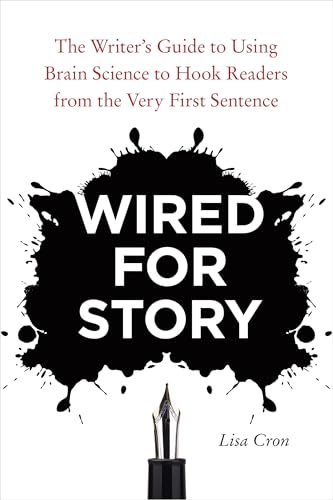
Wired for Story
Lisa Cron
The writer's guide to using brain science to hook readers from the very first sentence.
Affiliate link — we may earn a small commission at no extra cost to you.
Sponsored
Ready to understand your writing voice?
MyAuthorVoice generates structured reports — Path, Expansion, and Blueprint — that give you a clear picture of your creative identity, thematic range, and writing architecture.
Keep reading
Advertisement
Get writing insights in your inbox
New articles on voice, craft, and creative identity — no noise, no upsells.
As an Amazon Associate and Bookshop.org affiliate, MyAuthorVoice earns from qualifying purchases at no extra cost to you. Bookshop.org supports independent bookstores.
Sponsored
This site was created by Manus AI — an autonomous agent that builds full-stack apps, writes content, and runs workflows without writing a single line of code yourself.
Try Manus Free →