How to Identify the Themes You Return to in Your Writing: A Definitive Guide for Serious Authors
MyAuthorVoice Editorial
Writing craft & author identity
Understanding the recurring themes in your writing is crucial for developing a cohesive authorial voice and thematic depth. This process involves a deliberate analysis of your past works, recognizing the underlying ideas and questions that consistently surface, and consciously integrating this insig
How to Identify the Themes You Return to in Your Writing: A Definitive Guide for Serious Authors
Understanding the recurring themes in your writing is crucial for developing a cohesive authorial voice and thematic depth. This process involves a deliberate analysis of your past works, recognizing the underlying ideas and questions that consistently surface, and consciously integrating this insight into your future creative endeavors. By identifying these thematic threads, you can refine your storytelling, deepen your connection with readers, and articulate a clearer creative identity.
Table of Contents
- The Unseen Architecture: Why Themes Matter to Your Creative Identity
- Decoding Your Literary DNA: A Step-by-Step Framework for Thematic Discovery
- Beyond the Surface: Distinguishing Theme from Plot and Motif
- Thematic Evolution: How Your Core Ideas Develop Over Time
- Leveraging Your Thematic Signature for Deeper Reader Connection
- Integrating Thematic Awareness into Your Writing Practice
- Ready to Understand Your Writing Voice?
The Unseen Architecture: Why Themes Matter to Your Creative Identity
For many writers, the act of creation often feels like an intuitive flow, a channeling of ideas and narratives onto the page. Yet, beneath the surface of plot, character, and setting lies a deeper, often unconscious stratum: the recurring themes that give your work its unique resonance and enduring meaning. These aren't merely plot devices; they are the philosophical questions, moral dilemmas, and human experiences that you, as an author, are compelled to explore repeatedly. Identifying these thematic undercurrents is not just an academic exercise; it's a vital step in understanding your creative identity and solidifying your authorial voice.
Consider the work of a seasoned novelist. While their stories might vary wildly in genre, setting, or character, a careful reader can often discern a consistent set of concerns. Perhaps they perpetually examine the nature of memory and loss, the struggle for freedom against oppressive systems, or the complex interplay between individual ambition and societal expectation. These aren't accidental repetitions; they are the foundational pillars of their creative worldview, the intellectual and emotional landscape they invite readers to explore with each new book. Without a conscious understanding of these themes, a writer risks their work feeling disparate, lacking the cohesive philosophical backbone that elevates good storytelling to great art.
Furthermore, recognizing your thematic patterns allows for intentional growth. Once you know what you tend to write about, you can begin to ask how you write about it, and why those particular ideas hold such sway over your imagination. This self-awareness empowers you to delve deeper into these themes, approaching them from fresh angles, exploring their nuances, and challenging your own preconceived notions. It moves you beyond simply telling a story to actively engaging in a sustained, evolving conversation with your readers about the human condition, as seen through your unique lens. This is the essence of a strong authorial voice, a voice that is not just recognizable by its style, but by the consistent, compelling ideas it grapples with. It's about understanding the "why" behind your "what," and that understanding forms the bedrock of a truly impactful writing career.
Decoding Your Literary DNA: A Step-by-Step Framework for Thematic Discovery
Unearthing the recurring themes in your body of work requires a systematic approach, moving beyond casual observation to deliberate analysis. This isn't about imposing themes where none exist, but rather about revealing the patterns that have organically emerged from your creative subconscious.
Here’s a structured framework to guide you through this process:
Step 1: Gather Your Complete Works (or a Representative Sample) Begin by compiling everything you've written: published novels, short stories, essays, even significant blog posts or unfinished manuscripts. If your output is extensive, select a representative sample that spans different periods or genres you've explored. The goal is to have enough material to identify consistent patterns, not just isolated instances. Ensure these works are in a format that allows for easy review, whether digital or print.
Step 2: Initial Read-Through and Annotation Read through each piece with a specific focus on ideas, questions, and conflicts that resonate with you beyond the immediate plot. As you read, make notes. Don't worry about categorizing yet; simply highlight or jot down anything that feels significant, thought-provoking, or emotionally charged. Ask yourself:
- What big questions does this story implicitly or explicitly ask?
- What universal human experiences are being explored?
- What values or beliefs are being challenged or upheld?
- What kind of struggles do your characters face repeatedly?
- What transformations do your characters undergo?
Step 3: Brainstorm Core Concepts and Keywords After your initial read-through, review all your annotations. Look for common threads. Do certain words or phrases appear repeatedly in your notes? Do similar types of conflicts or character arcs emerge across different stories? Start listing single words or short phrases that encapsulate these recurring ideas. For example, if you noted "characters sacrificing for a greater good," "heroes struggling with impossible choices," and "the cost of idealism," you might distill these into keywords like "sacrifice," "moral dilemma," "idealism," or "consequences." Don't self-censor; list everything that comes to mind.
Step 4: Group and Categorize Your Concepts Now, take your brainstormed list of concepts and begin grouping them into broader categories. You might find that "loneliness," "isolation," and "the search for belonging" can all be grouped under a larger theme of "connection vs. alienation." Similarly, "power dynamics," "social injustice," and "rebellion" might fall under "authority and resistance." Aim for 3-7 overarching thematic categories that feel comprehensive yet distinct. This is where you start to see the larger patterns emerge.
Step 5: Articulate Your Themes as Questions or Statements Once you have your categories, refine them into clear, concise thematic statements or questions. A theme isn't just a word; it's an idea explored. Instead of just "love," consider "The destructive nature of unrequited love" or "How love can redeem or corrupt." Instead of "war," consider "The psychological toll of conflict on the individual" or "The futility of violence." Formulating them this way helps you understand the specific angle from which you approach these universal ideas.
Step 6: Validate with Specific Examples Go back to your original works and find specific scenes, character arcs, or narrative choices that exemplify each identified theme. Can you point to concrete instances where "the struggle for identity" is clearly demonstrated? Does a particular character's journey directly illustrate "the corrupting influence of power"? This validation step ensures your identified themes are genuinely present in your work and not merely projections. This rigorous analysis is precisely the kind of deep dive that MyAuthorVoice's Expansion report offers, helping writers articulate their thematic range with precision.
Step 7: Reflect and Document Finally, document your findings. Write down your core themes, the questions they explore, and key examples from your work. This document becomes a valuable resource, a thematic map of your creative landscape. It will inform your future writing, allowing you to consciously engage with these ideas or even intentionally explore new ones. This reflection is crucial for transforming unconscious patterns into deliberate artistic choices.
Beyond the Surface: Distinguishing Theme from Plot and Motif
To truly understand the themes that underpin your writing, it's essential to differentiate them from related but distinct narrative elements: plot and motif. While all three contribute to the overall experience of a story, their roles and functions are fundamentally different. Confusing them can lead to a superficial understanding of your own creative output.
Let's begin with plot. The plot is the sequence of events that constitute a story. It's the "what happens next" – the characters' actions, the conflicts they face, and the resolutions they achieve. Plot is concrete, chronological, and typically driven by external forces or character decisions. For instance, in The Lord of the Rings, the plot involves Frodo's journey to Mordor to destroy the One Ring, the battles fought, and the alliances formed. It's the narrative engine that propels the reader forward.
Motif, on the other hand, is a recurring element that has symbolic significance but isn't necessarily a central idea. It can be an image, a sound, a phrase, an object, or even a specific situation that appears repeatedly throughout a text. Motifs often serve to reinforce a theme, but they are not the theme itself. In The Great Gatsby, the green light at the end of Daisy's dock is a powerful motif. It appears multiple times, symbolizing Gatsby's elusive dream, hope, and the unattainable past. While it contributes to the themes of the American Dream, illusion, and longing, the green light itself is not the theme; it's a recurring image that points to those themes.
Theme, by contrast, is the underlying message, the universal idea, or the central insight that the story explores. It's the "why" and the "so what" of the narrative. Themes are abstract concepts, often expressed as a statement or a question about the human condition, society, or morality. They are not explicitly stated by the author but are revealed through the plot, characters, and motifs. In The Lord of the Rings, themes include the corrupting nature of power, the importance of friendship and loyalty, and the struggle between good and evil. These are abstract ideas that the entire epic explores through its specific plot events and recurring motifs (like the Ring itself, or the Eye of Sauron).
Here's a comparison to clarify:
| Feature | Plot | Motif | Theme |
|---|---|---|---|
| Definition | Sequence of events, "what happens" | Recurring symbolic element | Underlying message, universal idea, "so what" |
| Nature | Concrete, chronological, action-driven | Symbolic, repetitive, often sensory | Abstract, philosophical, conceptual |
| Function | Drives narrative, creates tension | Reinforces theme, adds depth, creates mood | Provides meaning, offers insight, unifies work |
| Example | Harry Potter goes to Hogwarts. | Harry's scar, the number seven | The power of love over evil, the nature of sacrifice, prejudice and acceptance |
| Question | What happens next? | What keeps appearing? What does it represent? | What is this story really about? What truth does it reveal? |
Understanding this distinction is vital for a writer. If you only focus on plot, your stories might be exciting but lack depth. If you only scatter motifs, your work might feel symbolic but without a clear purpose. It is the conscious or unconscious exploration of theme, however, that gives your writing its lasting impact and allows you to communicate profound truths to your audience. When you identify the themes you return to, you are identifying the core intellectual and emotional concerns that define your unique contribution to literature.
Thematic Evolution: How Your Core Ideas Develop Over Time
The themes you explore in your writing are rarely static; they are living entities that evolve alongside your own life experiences, intellectual growth, and artistic development. What might begin as a nascent curiosity in an early short story can mature into a complex, multi-faceted exploration across a series of novels. Recognizing this thematic evolution is key to understanding the trajectory of your creative journey and can offer profound insights into your authorial voice.
Think of a recurring theme not as a fixed point, but as a river. In your early work, it might be a narrow stream, exploring a particular aspect of the theme with a relatively straightforward perspective. Perhaps you write about "justice" as a simple dichotomy of good versus evil. As you gain more life experience, read more widely, and encounter different perspectives, that stream widens into a river. Your understanding of "justice" might deepen to include nuances of restorative justice, the complexities of systemic inequality, or the moral ambiguities of vigilante action. The theme remains, but your approach to it, the questions you ask, and the conclusions you suggest become richer and more sophisticated.
Case Study: Ursula K. Le Guin — Early in her career, Le Guin explored themes of gender, power, and societal structures through the lens of fantasy and science fiction, often presenting clear allegories. After The Left Hand of Darkness, her later works, such as Always Coming Home and her Earthsea cycle's later books, demonstrated a more nuanced, less didactic approach to these same themes. She moved from questioning gender roles to exploring the very nature of language, culture, and non-hierarchical societies, reflecting a deeper philosophical engagement with the complexities of human organization and identity.
This evolution is often driven by several factors. Personal milestones – a significant loss, a new relationship, a profound experience – can dramatically shift your perspective on themes like grief, love, or freedom. Intellectual pursuits, such as delving into philosophy, history, or psychology, can provide new frameworks for understanding the human condition, enriching your thematic palette. Even the act of writing itself, grappling with characters and their dilemmas, can force you to confront and refine your own understanding of the ideas you are exploring.
Moreover, your thematic evolution isn't always about deepening a single theme; it can also involve expanding its scope or connecting it with other themes. A writer who initially focused on "individual isolation" might later explore how that isolation is exacerbated by "technological alienation" or overcome through "community building." The core concern remains, but its manifestations and interconnections become more intricate. Understanding this dynamic process allows you to chart your growth as a writer, to see how your creative concerns have matured, and to consciously guide your future work towards ever-greater depth and complexity. It’s a testament to the fact that your writing isn't just a collection of stories, but an ongoing, evolving conversation with the world and with yourself.
Leveraging Your Thematic Signature for Deeper Reader Connection
Once you've identified the recurring themes in your work, you possess a powerful tool not just for self-understanding, but for forging a more profound connection with your readership. Your thematic signature—the unique constellation of ideas you consistently explore—is a core component of your authorial brand, whether you consciously cultivate it or not. By understanding and articulating these themes, you can attract readers who resonate with your specific intellectual and emotional concerns, transforming casual readers into dedicated followers.
Readers are often drawn to authors not just for their plot or genre, but for the particular worldview or set of questions their stories consistently engage with. A reader who is deeply concerned with environmental ethics might gravitate towards authors who explore humanity's relationship with nature, regardless of whether the story is a sci-fi epic or a contemporary drama. Similarly, someone grappling with questions of identity and belonging will seek out narratives that delve into those complex psychological landscapes. When you explicitly acknowledge and even articulate your thematic interests, you provide a clear signal to these readers, helping them find you amidst the vast sea of published works.
This isn't about overtly stating your themes in every book blurb, but rather allowing them to inform your author messaging, your blog posts, and even your interactions with readers. If you know that a central theme in your work is "the resilience of the human spirit in the face of adversity," you can subtly weave this into how you talk about your characters, your inspirations, and the overall impact you hope your stories have. This creates a consistent and authentic brand identity that goes beyond genre labels.
📚 Recommended: Platform: Get Noticed in a Noisy World by Michael Hyatt — This book provides practical strategies for building an author platform and connecting with your ideal audience, which is greatly enhanced by knowing your thematic signature. Amazon link
Furthermore, a clear thematic signature fosters a sense of trust and familiarity with your audience. Readers appreciate consistency, not necessarily in plot or setting, but in the intellectual and emotional landscape they are invited to explore. They come to expect that a book by you will offer a particular kind of depth, a certain type of ethical dilemma, or a nuanced perspective on a specific human experience. This expectation builds loyalty. When a reader finishes one of your books and feels that familiar resonance of a core idea explored in a fresh way, they are far more likely to seek out your next work. It creates a cumulative effect, where each new book adds another layer to the ongoing conversation you're having with your dedicated readership. This deep connection, built on shared intellectual and emotional ground, is invaluable for any serious author aiming for a lasting career.
Integrating Thematic Awareness into Your Writing Practice
Identifying your recurring themes is merely the first step; the true power lies in consciously integrating this awareness into your ongoing writing practice. This doesn't mean becoming didactic or preachy, but rather allowing your thematic insights to inform your creative choices, from initial concept to final revision. It’s about leveraging your unique thematic signature to craft more resonant, cohesive, and impactful stories.
One of the most immediate applications of thematic awareness is in the ideation and planning phase. When you're brainstorming new story ideas, you can intentionally consider how a potential plot might allow you to explore one of your core themes from a fresh angle. Instead of simply thinking, "What's an interesting story idea?", you might ask, "How can this premise illuminate the complexities of 'redemption' or challenge my understanding of 'free will'?" This approach can help you generate ideas that feel inherently meaningful and deeply connected to your authorial voice, rather than feeling like a departure from your established concerns. MyAuthorVoice's Blueprint report can help you structure these ideas, ensuring thematic consistency from the ground up.
During character development, thematic awareness can add layers of depth and authenticity. If "the struggle for identity" is a recurring theme for you, you can consciously craft characters whose internal and external conflicts directly embody this struggle. Their motivations, their flaws, their arcs of transformation can all be designed to reflect different facets of this central idea. This ensures that your characters aren't just moving through a plot, but are actively engaging with the philosophical underpinnings of your story, making their journeys more compelling and relatable.
In world-building, especially for speculative fiction, themes can guide the very fabric of your fictional reality. If "the corrupting influence of power" is a key theme, you might construct societies with rigid hierarchies, oppressive governments, or technologies that grant immense, unchecked authority. The physical and social landscapes of your world can become metaphors for the themes you wish to explore, creating an immersive experience that reinforces your message without explicitly stating it.
Finally, during the revision process, thematic awareness becomes a powerful editorial tool. As you review your drafts, you can ask:
- Does this scene effectively contribute to the exploration of my core themes?
- Are there opportunities to deepen the thematic resonance of this dialogue or character interaction?
- Are there any inconsistencies in how my themes are presented?
- Does the ending provide a satisfying thematic resolution or raise compelling thematic questions?
This conscious integration allows you to refine your work, ensuring that every element—plot, character, setting, and dialogue—serves to illuminate the central ideas that make your writing uniquely yours. It transforms your writing from a series of disconnected narratives into a cohesive body of work, each piece contributing to an ongoing, evolving conversation with your readers about the truths you find most compelling.
📚 Recommended: Scrivener 3 for Mac & Windows: The Complete Guide by Gwen Hernandez — Scrivener's robust organizational features are ideal for tracking themes, character arcs, and plot points across multiple projects, helping you integrate thematic awareness into your writing process. Amazon link
Ready to Understand Your Writing Voice?
Identifying your recurring themes is a profound act of self-discovery, revealing the intellectual and emotional bedrock of your creative output. This insight is invaluable for any serious writer looking to deepen their craft and connect more authentically with their audience. To further explore your unique creative identity, thematic range, and writing architecture, consider the comprehensive reports offered by MyAuthorVoice. Whether you're looking to define your voice with the Path report, expand your thematic understanding with the Expansion report, or refine your narrative structure with the Blueprint report, these tools are designed to provide clarity and actionable insights. Take the intake today and begin your journey toward a more conscious and powerful writing practice.
Advertisement


As an Amazon Associate and Bookshop.org affiliate, MyAuthorVoice earns from qualifying purchases at no extra cost to you. Bookshop.org supports independent bookstores.
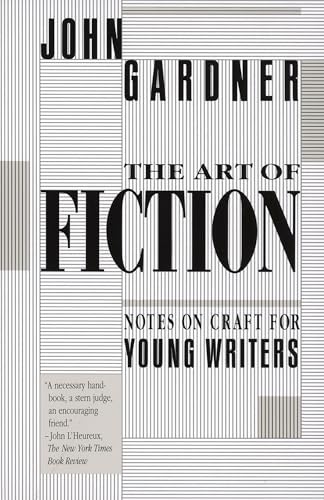
The Art of Fiction
John Gardner
Notes on craft for young writers. A rigorous and inspiring guide to literary technique.
Affiliate link — we may earn a small commission at no extra cost to you.
Sponsored
Ready to understand your writing voice?
MyAuthorVoice generates structured reports — Path, Expansion, and Blueprint — that give you a clear picture of your creative identity, thematic range, and writing architecture.
Keep reading
theme
The Emotional Core of Your Writing: How to Identify What Your Stories Are Really About
3900+ words
theme
How Unprocessed Trauma Shapes a Writer's Recurring Themes: A 2024 Guide for Serious Authors
4200+ words
theme
How to Identify the Themes You Return to in Your Writing: A Definitive Guide for Serious Authors
3500+ words
Advertisement
Get writing insights in your inbox
New articles on voice, craft, and creative identity — no noise, no upsells.

As an Amazon Associate and Bookshop.org affiliate, MyAuthorVoice earns from qualifying purchases at no extra cost to you. Bookshop.org supports independent bookstores.
Sponsored
This site was created by Manus AI — an autonomous agent that builds full-stack apps, writes content, and runs workflows without writing a single line of code yourself.
Try Manus Free →