
How to Reclaim Your Author Voice After Years of Mimicry
MyAuthorVoice Editorial
Writing craft & author identity
Reclaiming your authentic author voice involves a deliberate process of introspection, deconstruction of ingrained habits, and focused practice to unearth the unique linguistic and thematic patterns that define your true creative identity. It requires acknowledging the influences that shaped your pr
How to Reclaim Your Author Voice After Years of Mimicry
Reclaiming your authentic author voice involves a deliberate process of introspection, deconstruction of ingrained habits, and focused practice to unearth the unique linguistic and thematic patterns that define your true creative identity. It requires acknowledging the influences that shaped your previous writing and consciously cultivating your intrinsic style.
Table of Contents
- The Silent Erosion: How Writing in Someone Else's Style Diminishes Your Voice
- Identifying the Echo: Pinpointing the Borrowed Elements in Your Writing
- The Deconstruction Phase: A Step-by-Step Guide to Unlearning
- Cultivating Your Core: Exploring Your Thematic and Stylistic DNA
- Strategic Practice: Rewriting, Experimentation, and Feedback
- Embracing the New: Integrating Your Reclaimed Voice into Your Work
- Sustaining Authenticity: Long-Term Strategies for Voice Maintenance
The Silent Erosion: How Writing in Someone Else's Style Diminishes Your Voice
For many writers, the journey begins with imitation. We learn by studying the masters, dissecting their sentences, analyzing their narrative structures, and sometimes, consciously or unconsciously, adopting their stylistic tics. This is a natural and often necessary stage of development, a form of apprenticeship where we absorb the craft. However, when this imitation extends for years, perhaps driven by professional demands, market trends, or simply a prolonged period of uncertainty about one's own capabilities, it can lead to a silent erosion of the authentic author voice. The very act of constantly writing in a prescribed manner, adhering to a client's brand guidelines, mimicking a popular genre's conventions, or ghostwriting for another individual, gradually dampens the unique cadences, thematic inclinations, and structural preferences that constitute your true writing identity.
This diminishment isn't merely about losing a particular turn of phrase; it's a deeper systemic issue. Your voice is intrinsically linked to your perspective, your worldview, your emotional landscape, and your intellectual curiosities. When you consistently suppress these elements to fit an external mold, you begin to lose touch with them. The process can feel like wearing ill-fitting clothes for so long that you forget what your own body feels like. You might find yourself struggling to articulate your own ideas without resorting to familiar, borrowed language. Your thematic range might narrow, constrained by the boundaries of the styles you've adopted. Even your creative process can suffer, as the joy of genuine self-expression is replaced by the mechanical execution of someone else's vision. The danger lies in the gradual nature of this erosion; it often goes unnoticed until a writer attempts to embark on a truly personal project and finds their own voice elusive, a mere whisper beneath layers of acquired habits. Reclaiming it becomes not just a stylistic exercise, but an act of self-discovery and creative liberation.
Identifying the Echo: Pinpointing the Borrowed Elements in Your Writing
Before you can reclaim your voice, you must first understand what you've lost, or rather, what you've absorbed that isn't inherently yours. This stage requires a critical, almost forensic, examination of your past and present writing. It's not about judgment, but about objective identification. Begin by gathering a diverse sample of your work: pieces written for clients, personal projects from before your "mimicry" phase, journal entries, and any current writing. Lay them out, metaphorically or literally, and look for patterns.
Consider the following aspects:
| Aspect of Voice | Borrowed Style Characteristics (Examples) | Authentic Voice Characteristics (Examples) |
|---|---|---|
| Sentence Structure | Predominantly short, punchy sentences (marketing copy); overly complex, academic sentences (technical writing); repetitive sentence openings. | Varied sentence lengths, deliberate use of complex or simple structures for effect; unique rhythm and flow. |
| Vocabulary & Diction | Jargon-heavy (industry writing); overly formal or informal; reliance on clichés; specific brand terminology. | Distinctive word choices, precise language, natural vocabulary range, fresh metaphors. |
| Tone & Mood | Constantly upbeat and motivational (self-help); detached and objective (journalism); overly dramatic (genre fiction); consistently formal. | Reflects your genuine personality – perhaps witty, melancholic, hopeful, cynical, empathetic; shifts appropriately with content. |
| Perspective & Point of View | Always third-person objective; forced first-person "brand" voice; consistent authorial distance. | Preferred POV (first, second, third); unique lens through which you view and present information; level of intimacy with the reader. |
| Rhythm & Pacing | Fast-paced, breathless (thrillers); slow, contemplative (literary fiction); uniform pacing regardless of content. | Natural ebb and flow, deliberate acceleration or deceleration to build tension or emphasize points; musicality of prose. |
| Thematic Tendencies | Limited to specific industry topics; dictated by client briefs; avoiding controversial subjects. | Recurring interests, core beliefs, philosophical questions, unique angles on universal themes. |
| Use of Figurative Language | Sparse or cliché metaphors/similes; dictated by specific brand guidelines. | Original metaphors, vivid imagery, personal symbolism, unique way of describing the abstract. |
As you review your work, highlight sentences, paragraphs, or even entire sections that feel "off" or that you suspect were influenced by an external style. Compare these to any older, more personal writings. Do you see a shift in your natural inclination? Are there phrases you use now that you never would have before? Pay attention to what feels forced versus what flows effortlessly. This exercise isn't about perfection, but about honest recognition. It's the first step toward consciously disentangling your voice from the echoes of others.
The Deconstruction Phase: A Step-by-Step Guide to Unlearning
Unlearning ingrained habits is often more challenging than learning new ones. The deconstruction phase is about systematically dismantling the borrowed elements you've identified, creating space for your authentic voice to emerge. This isn't a quick fix; it requires patience, persistence, and a willingness to feel uncomfortable as you shed familiar stylistic crutches.
Step 1: Isolate and Analyze Influences. Begin by explicitly identifying the specific authors, brands, or genres whose styles you've adopted. Gather samples of their writing alongside samples of your own work where their influence is most apparent. Create a side-by-side comparison. What specific elements did you borrow? Was it their sentence length, their use of humor, their particular vocabulary, their narrative structure, or their thematic approach? Pinpoint these details with precision. For instance, if you've been ghostwriting for a motivational speaker, you might notice an overuse of rhetorical questions, an abundance of positive affirmations, and a consistently inspiring tone in your own work.
Step 2: Conscious Avoidance and Substitution. Once you've identified specific borrowed patterns, make a conscious effort to avoid them. This is where the real work begins. When you sit down to write, keep a checklist of your "no-go" stylistic elements. If you find yourself gravitating towards a particular cliché or sentence structure that isn't yours, pause. Actively seek an alternative. This might mean rewriting sentences multiple times, consulting a thesaurus for a more precise word, or experimenting with different ways to convey an idea. This process will feel clunky and slow at first, like learning to write with your non-dominant hand. Embrace the awkwardness; it's a sign you're breaking old patterns.
Step 3: Free Writing and Stream of Consciousness. Dedicate regular time to free writing, specifically with the intention of not thinking about audience, market, or external expectations. Write without editing, without pausing, and without judgment. The goal here is to bypass the conscious mind that might still be defaulting to borrowed styles and allow your subconscious, authentic voice to surface. Write about anything: your day, a memory, a philosophical musing, a dream. Don't worry about coherence or quality. The aim is to simply get words on the page that originate purely from you. Review these free-writing sessions later to identify any emerging patterns, unique turns of phrase, or thematic interests that feel genuinely yours.
Step 4: Rewrite Your Own Work Through a New Lens. Take a piece of your writing that you feel is heavily influenced by another style. Now, rewrite it entirely, but with the explicit goal of removing all borrowed elements. Imagine you are explaining the same concept or telling the same story to a close friend, in your most natural speaking voice. How would you phrase it? What words would you use? What details would you emphasize? This exercise forces you to translate the content into your own linguistic and emotional framework. You might find yourself simplifying complex sentences, adding personal anecdotes, or injecting a sense of humor that was previously absent.
Step 5: Seek External Feedback (Carefully). Once you've made some progress in deconstructing, share your work with a trusted reader who understands your goal. Ask them specifically to identify any lingering echoes of other writers or styles. Be clear that you're not looking for general critique, but targeted feedback on your voice. A fresh pair of eyes can often spot patterns you've become blind to. However, choose your readers wisely; someone who is too critical or prescriptive might inadvertently push you back into a different borrowed style. The aim is to confirm you're shedding the old skin, not to adopt another.
Case Study: Eleanor Vance — Before, Eleanor wrote exclusively corporate blog posts, adopting a formal, data-driven, and somewhat detached tone. After consciously deconstructing her reliance on corporate jargon and academic sentence structures through targeted rewriting and free-writing exercises, she discovered a natural inclination towards lyrical prose and personal storytelling, which she now integrates into her literary essays.
Cultivating Your Core: Exploring Your Thematic and Stylistic DNA
Reclaiming your author voice isn't just about removing what isn't yours; it's profoundly about discovering and nurturing what is. This phase involves deep introspection into your unique perspective, the themes that resonate with you, and the natural rhythms of your thought process. Think of it as uncovering your creative DNA. Your voice is not merely a collection of words; it's the expression of your singular way of seeing, feeling, and understanding the world.
Start by reflecting on your fundamental beliefs and values. What topics ignite your passion? What injustices stir your anger? What beauty moves you to awe? These are the wellsprings of your thematic core. Often, writers who have spent years mimicking others have suppressed these personal inclinations, focusing instead on what was expected or marketable. Now is the time to give them space. Journal extensively about these topics. Don't worry about crafting polished prose; simply explore your thoughts and feelings. You might find recurring motifs, persistent questions, or a particular lens through which you consistently view human experience. For example, a writer who spent years crafting upbeat marketing copy might discover a deep-seated fascination with the melancholic beauty of transient moments, or the complexities of moral ambiguity, themes they previously felt compelled to avoid.
Beyond themes, consider your natural stylistic inclinations. How do you naturally communicate when you're not trying to impress or conform? Are you naturally witty and sarcastic, or earnest and contemplative? Do you prefer direct, declarative sentences, or do you enjoy weaving intricate clauses? Do you lean towards vivid, sensory descriptions, or are you more abstract and philosophical? Listen to yourself speak, or record yourself telling a story. Often, our spoken voice holds clues to our authentic written voice. Pay attention to your natural cadence, your preferred vocabulary, and the way you structure your thoughts verbally.
Another powerful exercise is to revisit the books, films, and art that genuinely moved you before you became immersed in professional writing. What aspects of those works resonated deeply? Was it the author's psychological insight, their poetic language, their unflinching honesty, or their innovative narrative structure? These preferences often reflect your own aesthetic sensibilities and hint at the kind of writer you aspire to be, independent of external pressures. You might find that the authors who truly impacted you share a certain stylistic trait or thematic concern that aligns with your emerging authentic voice. This isn't about imitating them, but about recognizing shared artistic values and understanding the lineage of your own creative spirit. MyAuthorVoice's Path report, for instance, can be instrumental here, providing a structured analysis of your creative identity and voice, helping you pinpoint these intrinsic patterns that define your unique writing architecture. It offers a mirror to your own stylistic DNA, revealing the underlying structures and preferences that are authentically yours.
Strategic Practice: Rewriting, Experimentation, and Feedback
With a clearer understanding of your authentic voice and the borrowed elements you need to shed, the next stage is strategic practice. This isn't just about writing more; it's about writing differently, with intention and a focus on experimentation.
One of the most effective practices is rewriting existing material. Take a piece you wrote while operating in a borrowed style – perhaps an old blog post, a chapter from a ghostwritten project, or even a client email. Now, rewrite it entirely from scratch, consciously applying your emerging authentic voice. Ask yourself: How would I say this? What words would I choose? What tone would I adopt? This isn't about making it "better" in a universal sense, but about making it more you. You might find yourself simplifying complex sentences, injecting personal anecdotes, or shifting the perspective entirely. This exercise acts as a muscle memory builder, training your brain to default to your own patterns rather than inherited ones.
Experimentation is crucial. Don't be afraid to try different genres, forms, or stylistic approaches that you've never attempted before. If you've always written non-fiction, try a short story. If you're a novelist, try poetry or a personal essay. These exploratory ventures can liberate you from the constraints of familiar expectations and allow your voice to surface in unexpected ways. Perhaps you discover a penchant for dry wit in a satirical piece, or a lyrical quality in a descriptive passage that you never knew you possessed. The key is to write without the pressure of publication or perfection, simply for the joy of discovery. This is about playing with language, pushing boundaries, and seeing what feels right.
Finally, seeking targeted feedback becomes vital. Once you have a body of work that you believe reflects your reclaimed voice, share it with a trusted writing group, a beta reader, or a professional editor. Crucially, instruct them on what you're looking for. Instead of a general critique, ask specific questions: "Does this sound like me?" "Are there still echoes of [Author X] or [Brand Y] in this piece?" "What unique qualities do you perceive in my writing here?" This targeted feedback can provide invaluable external validation and help you fine-tune your understanding of your own voice. It's important to differentiate between constructive criticism that helps you refine your voice and suggestions that would push you back into someone else's. Learn to trust your intuition about what feels authentic to you, even if it deviates from conventional advice.
This phase is iterative. You'll rewrite, experiment, get feedback, and then repeat the process. Each cycle refines your understanding and strengthens your command of your true authorial identity.
📚 Recommended: Write. Publish. Repeat. by Sean Platt and Johnny B. Truant — This book emphasizes the importance of prolific writing and experimentation, which are key to developing and refining your unique voice. Amazon link
Embracing the New: Integrating Your Reclaimed Voice into Your Work
Once you've spent significant time deconstructing borrowed styles and cultivating your core, the next challenge is to fully embrace and integrate your reclaimed voice into all aspects of your writing. This isn't just about a single project; it's about a fundamental shift in your approach to authorship. It means consciously choosing to lead with your authentic self, even when it feels vulnerable or goes against what you perceive as market expectations.
The first step in integration is to apply your reclaimed voice to a significant project. This could be a novel, a memoir, a collection of essays, or a new blog series. The act of sustaining your unique style over a longer form forces you to internalize it more deeply. You'll encounter moments of doubt, where the old, familiar patterns might try to resurface. This is where your conscious awareness and the practices from the deconstruction phase become crucial. Keep your "no-go" list handy, and regularly check in with yourself: "Does this sentence truly sound like me?"
Next, consider how your voice impacts your thematic choices and narrative architecture. Your reclaimed voice isn't just about word choice; it influences what you choose to write about and how you structure your stories. If you've discovered a penchant for nuanced character studies, your plots might become less action-driven and more psychologically intricate. If your voice is inherently humorous, you might find yourself weaving comedic relief into unexpected places. Allow your authentic voice to dictate not just the style, but also the substance and structure of your work. This is where MyAuthorVoice's Blueprint report can be particularly insightful, helping you understand how your intrinsic creative patterns naturally shape your narrative structure and execution.
Finally, communicate your voice confidently. This extends beyond the page. When discussing your work with agents, editors, or readers, be prepared to articulate what makes your voice unique. Embrace the fact that your voice might not appeal to everyone, and that's perfectly fine. The goal is not universal appeal, but deep connection with the readers who resonate with your specific frequency. This confidence comes from the deep work you've done to understand yourself as a writer. It's about owning your creative identity, even if it means stepping away from previously successful but inauthentic approaches. The integration of your reclaimed voice is a continuous process of self-affirmation and creative courage.
Sustaining Authenticity: Long-Term Strategies for Voice Maintenance
Reclaiming your author voice is a significant achievement, but sustaining it amidst the ongoing pressures of the writing world requires continuous vigilance and strategic practices. The marketplace, publishing trends, and even well-meaning advice can constantly pull you back towards conformity. Therefore, maintaining your authentic voice is an active, long-term commitment.
One crucial strategy is to regularly engage in "voice check-ins." Periodically, step back from your current project and review your recent writing. Ask yourself: Does this still sound like me? Am I falling back into old habits? Are there new external influences creeping in? This self-assessment can be as simple as rereading a few pages with a critical ear, or as formal as using an author voice platform like MyAuthorVoice to analyze your current work against your established voice profile. These check-ins act as a calibration tool, ensuring you remain aligned with your true creative identity.
Another vital practice is to cultivate a strong "inner editor" that is attuned to your voice. This isn't the editor that focuses on grammar or punctuation, but the one that instinctively knows when a sentence or a paragraph doesn't feel like you. This inner editor develops over time through consistent practice and self-awareness. It's the gut feeling that tells you when a word choice is forced, or a thematic exploration feels inauthentic to your perspective. Trusting this internal compass is paramount to long-term voice maintenance.
Furthermore, diversify your reading and creative inputs. While it's important to study authors you admire, don't limit yourself to a narrow range. Expose yourself to different genres, art forms, and intellectual disciplines. This broad exposure can prevent your voice from becoming stagnant or overly influenced by a single source. It feeds your unique perspective with varied stimuli, allowing your voice to evolve organically rather than being shaped by external trends. This also includes engaging with non-writing activities that nourish your soul and worldview, as these experiences directly inform your thematic depth and unique perspective.
Finally, embrace your writer's journey as an ongoing evolution. Your voice isn't a static entity; it will naturally mature and deepen as you grow as a person and as an artist. The goal isn't to lock into one specific style forever, but to ensure that any evolution is authentic to you, rather than a reaction to external pressures. Be open to your voice changing, but always ensure that those changes originate from within your core creative identity. By consistently engaging in these practices, you can safeguard your reclaimed author voice, ensuring it remains a powerful and true expression of who you are as a writer.
📚 Recommended: Platform: Get Noticed in a Noisy World by Michael Hyatt — While focused on building an audience, this book implicitly emphasizes the need for a distinct, authentic voice to stand out, which is crucial for long-term author identity. Amazon link
8-Question FAQ Section
Q: How long does it typically take to reclaim an author voice? A: The timeline varies significantly for each writer, depending on the depth of ingrained habits and the consistency of practice. It can range from several months to a few years of dedicated effort and introspection.
Q: Can I still write in different styles for clients after reclaiming my voice? A: Yes, reclaiming your voice helps you understand your own intrinsic style. You can still adapt for client work, but you'll do so consciously, knowing you're stepping into a role, rather than losing yourself in it.
Q: What if my reclaimed voice isn't commercially viable? A: The primary goal is authenticity. While market considerations are real, a strong, unique voice often finds its audience. Focus on writing the best work you can, and then explore how to position it.
Q: Is it possible to have multiple authentic voices for different genres? A: While your core voice will remain consistent, it can manifest with different inflections or emphases across genres. Think of it as different registers of the same instrument, all played by you.
Q: How do I know if I've truly reclaimed my voice? A: You'll feel a sense of ease and naturalness in your writing, a deep resonance with the words on the page, and a confidence that what you're producing is uniquely yours, free from external influence.
Q: Should I discard all my previous work written in a borrowed style? A: Not necessarily. Your previous work is part of your journey. You can learn from it, identify what you want to move away from, and even rewrite parts of it as a practice exercise.
Q: What role does reading play in reclaiming my voice? A: Reading widely and deeply, especially works that resonate with your emerging authentic self, can inspire and inform your own stylistic choices, helping you refine your unique approach.
Q: Can a writing coach or editor help with this process? A: Absolutely. A good coach or editor can provide objective feedback, help you identify blind spots, and guide you through exercises designed to uncover and strengthen your authentic voice.
Ready to Understand Your Writing Voice?
Reclaiming your author voice is a transformative journey, one that deepens your connection to your craft and empowers your unique expression. If you're ready to explore the intrinsic patterns that define your creative identity, MyAuthorVoice offers structured reports to illuminate your path. Our Path report helps you understand your creative identity and voice, while the Expansion report delves into your thematic range, and the Blueprint report clarifies your structural preferences. Take the first step towards writing with authentic power and clarity. Start your report today and begin to truly understand the writer you were meant to be. For more insights and guidance on your writing journey, explore our writing guides.
Advertisement


As an Amazon Associate and Bookshop.org affiliate, MyAuthorVoice earns from qualifying purchases at no extra cost to you. Bookshop.org supports independent bookstores.
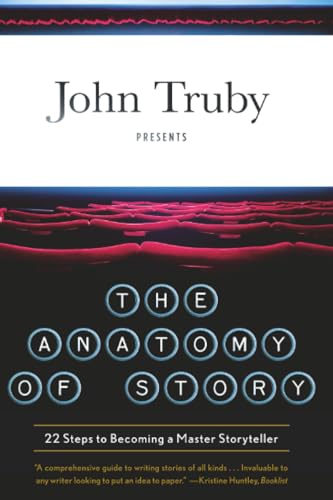
The Anatomy of Story
John Truby
Twenty-two steps to becoming a master storyteller. The most comprehensive guide to story structure available.
Affiliate link — we may earn a small commission at no extra cost to you.
Sponsored
Frequently Asked Questions
Ready to understand your writing voice?
MyAuthorVoice generates structured reports — Path, Expansion, and Blueprint — that give you a clear picture of your creative identity, thematic range, and writing architecture.
Keep reading
Advertisement
Get writing insights in your inbox
New articles on voice, craft, and creative identity — no noise, no upsells.

As an Amazon Associate and Bookshop.org affiliate, MyAuthorVoice earns from qualifying purchases at no extra cost to you. Bookshop.org supports independent bookstores.
Sponsored
This site was created by Manus AI — an autonomous agent that builds full-stack apps, writes content, and runs workflows without writing a single line of code yourself.
Try Manus Free →