How Your Childhood Reading Habits Predict Your Adult Writing Weaknesses (2026 Edition)
MyAuthorVoice Editorial
Writing craft & author identity
The foundational patterns established by the books you consumed in your formative years often manifest as subtle, yet persistent, challenges in your adult writing. These early literary experiences shape not just your preferences, but also your unconscious assumptions about narrative structure, chara
How Your Childhood Reading Habits Predict Your Adult Writing Weaknesses (2026 Edition)
The foundational patterns established by the books you consumed in your formative years often manifest as subtle, yet persistent, challenges in your adult writing. These early literary experiences shape not just your preferences, but also your unconscious assumptions about narrative structure, character development, prose style, and thematic depth, potentially leading to predictable blind spots in your craft.
Table of Contents
- The Unseen Influence: How Early Reading Shapes Your Authorial DNA
- Genre Immersion: The Double-Edged Sword of Early Specialization
- Prose Predilections: From Childhood Sentences to Adult Style Traps
- Narrative Architecture: Identifying Structural Weaknesses
- Overcoming Your Literary Legacy: A Framework for Growth
- Thematic Echoes: Expanding Your Emotional and Intellectual Range
- Beyond the Page: Leveraging Self-Awareness for Stronger Writing
The Unseen Influence: How Early Reading Shapes Your Authorial DNA
Long before you consciously decided to become a writer, your brain was diligently mapping the landscape of storytelling through the books you devoured as a child and adolescent. These early encounters weren't merely entertainment; they were foundational lessons in narrative construction, character psychology, world-building, and the very rhythm of language. Think of your childhood reading as the primary input for your nascent creative operating system. Every story absorbed, every sentence processed, contributed to an internal blueprint of what "good writing" felt like, what a "compelling plot" entailed, and how "characters" ought to behave. This unconscious absorption is incredibly powerful precisely because it operates beneath the level of critical analysis. You weren't dissecting themes or analyzing sentence structure; you were simply experiencing, and that experience laid down deep neural pathways.
The challenge arises when these deeply ingrained patterns become rigid. If your literary diet was heavily skewed towards a particular genre, a specific prose style, or a narrow range of narrative structures, your adult writing may unconsciously replicate these limitations. For instance, a childhood steeped in high fantasy might lead to an adult writer who struggles with grounding their stories in realistic settings or exploring nuanced psychological drama without resorting to epic quests. Conversely, an early diet of minimalist prose might leave a writer uncomfortable with rich description or complex world-building. These aren't necessarily flaws, but rather areas where your unconscious assumptions about writing might be restricting your potential. Recognizing these formative influences is the first step toward understanding the roots of your current writing challenges, allowing you to consciously expand beyond them rather than being unknowingly constrained by them. It's about understanding the "why" behind your default settings as a writer, which is a crucial component of developing a robust author voice platform.
Genre Immersion: The Double-Edged Sword of Early Specialization
Many writers discover their passion for storytelling through an intense, often exclusive, immersion in a particular genre during their formative years. For some, it was the sprawling epics of high fantasy, complete with intricate magic systems and heroic quests. For others, it was the cozy mysteries of small towns, the thrilling suspense of a detective novel, or the poignant realism of coming-of-age stories. This deep dive into a single genre provides an invaluable apprenticeship, teaching the conventions, tropes, and reader expectations from the inside out. It's how writers learn the rhythm of a good chase scene, the subtle art of foreshadowing in a thriller, or the emotional arc of a character's journey in a romance. This early specialization can be a tremendous asset, providing a strong foundation and a clear sense of identity within a chosen field.
However, this very strength can become a significant weakness if not consciously managed. A childhood spent exclusively within one genre can inadvertently limit a writer's perception of what's possible or effective in storytelling. For example, a writer who grew up solely on plot-driven thrillers might struggle with developing rich, introspective character arcs or exploring complex thematic ambiguities that don't directly serve a fast-paced narrative. They might find themselves defaulting to external conflict even when internal struggles would be more compelling. Similarly, someone steeped in literary fiction might overemphasize beautiful prose and thematic depth at the expense of a clear, engaging plot, leaving readers feeling adrift. The unconscious assumption becomes: "This is how stories are told," leading to a blind spot regarding alternative narrative strategies, stylistic choices, or even character motivations that fall outside the ge
Advertisement

As an Amazon Associate and Bookshop.org affiliate, MyAuthorVoice earns from qualifying purchases at no extra cost to you. Bookshop.org supports independent bookstores.
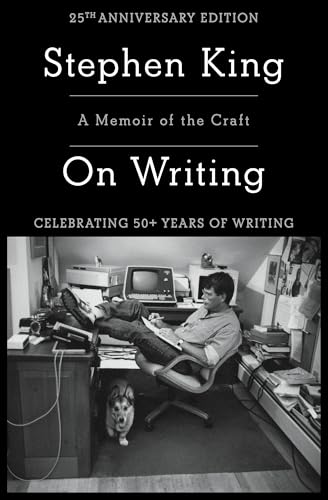
On Writing
Stephen King
A memoir of the craft. Half autobiography, half master class on writing.
Affiliate link — we may earn a small commission at no extra cost to you.
Sponsored
Frequently Asked Questions
Ready to understand your writing voice?
MyAuthorVoice generates structured reports — Path, Expansion, and Blueprint — that give you a clear picture of your creative identity, thematic range, and writing architecture.
Keep reading
Advertisement
Get writing insights in your inbox
New articles on voice, craft, and creative identity — no noise, no upsells.

As an Amazon Associate and Bookshop.org affiliate, MyAuthorVoice earns from qualifying purchases at no extra cost to you. Bookshop.org supports independent bookstores.
Sponsored
This site was created by Manus AI — an autonomous agent that builds full-stack apps, writes content, and runs workflows without writing a single line of code yourself.
Try Manus Free →