
How Your Dominant Sense Shapes Your Descriptive Style: An Author's Guide to Sensory-Rich Writing
MyAuthorVoice Editorial
Writing craft & author identity
Your dominant sensory modality—whether visual, auditory, or kinesthetic—profoundly influences how you perceive the world and, consequently, how you choose to describe it in your writing. Recognizing this innate preference allows you to leverage your strengths for more vivid prose and strategically a
How Your Dominant Sense Shapes Your Descriptive Style: An Author's Guide to Sensory-Rich Writing
Your dominant sensory modality—whether visual, auditory, or kinesthetic—profoundly influences how you perceive the world and, consequently, how you choose to describe it in your writing. Recognizing this innate preference allows you to leverage your strengths for more vivid prose and strategically address areas where your sensory descriptions might be less developed.
Table of Contents
- The Unseen Influence: How Sensory Modalities Define Perception
- Visual Writers: Painting Worlds with Light and Shadow
- Auditory Writers: Composing Narratives with Sound and Silence
- Kinesthetic Writers: Grounding Stories in Feeling and Movement
- Identifying Your Dominant Sensory Style
- Expanding Your Sensory Palette: A Framework for Holistic Description
- The Synergy of Senses: Crafting Immersive Worlds
- Ready to Understand Your Writing Voice?
The Unseen Influence: How Sensory Modalities Define Perception
Every writer, consciously or not, filters the world through a primary sensory lens. This dominant modality—visual, auditory, or kinesthetic—isn't merely a preference; it's a fundamental aspect of how information is processed, stored, and retrieved from memory. For writers, this translates directly into the raw material of their descriptive language. A visual writer might instinctively recall the precise shade of a character's eyes or the architectural details of a setting, while an auditory writer might remember the cadence of a voice or the ambient hum of a room. A kinesthetic writer, by contrast, might first register the subtle tension in a handshake or the texture of a worn armchair.
This inherent bias shapes not only what details are noticed but also how they are prioritized and articulated on the page. It forms the bedrock of a writer's natural descriptive style, influencing everything from character portrayal to world-building and emotional resonance. Understanding your own dominant sense, and recognizing its presence in other writers, offers a powerful tool for self-awareness and intentional craft development. It allows you to lean into your natural strengths, producing descriptions that feel authentic and effortless, while also highlighting areas where you might need to consciously broaden your sensory scope to create a more immersive and multifaceted experience for your reader. The goal is not to abandon your natural inclination but to understand it, refine it, and then strategically integrate other sensory details to achieve a richer, more complete tapestry of prose. This self-awareness is a crucial step in understanding your unique creative identity, a core component explored in depth by an author voice platform like MyAuthorVoice.
Visual Writers: Painting Worlds with Light and Shadow
For the visual writer, the world is a canvas of light, shadow, color, and form. Their descriptions are often characterized by a rich tapestry of observable details, focusing on what can be seen. They excel at setting scenes with precision, rendering characters with striking physical attributes, and depicting actions with clear, almost cinematic clarity. These writers naturally gravitate towards adjectives that describe appearance, verbs that convey visual movement, and metaphors that evoke imagery. Their prose often feels like a series of carefully composed photographs or a moving picture, where the reader is invited to observe the narrative unfold with their mind's eye.
Consider the opening of a novel by a strong visual writer. They might not just say "the room was dark," but rather "the room was steeped in a twilight gloom, where the edges of the antique furniture dissolved into indistinct smudges, and a single, dust-mote-laden shaft of moonlight sliced through the grimy windowpane, illuminating nothing but the swirling motes themselves." Here, the emphasis is on the quality of light, the lack of clarity, and specific visual elements like "smudges" and "shaft of moonlight." Character descriptions often include meticulous details about clothing, posture, facial expressions, and the nuances of their gaze. A visual writer might describe a character's eyes not just as "blue," but as "a startling cerulean, flecked with gold, that seemed to hold the distant memory of a summer sky." This attention to visual specificity creates a vivid mental picture for the reader, drawing them into the scene through their sense of sight.
Case Study: Virginia Woolf — Before focusing on the internal landscape and sensory details, Woolf's early work, while descriptive, sometimes leaned into conventional narrative. After refining her stream-of-consciousness technique, she masterfully blended visual perceptions with internal thoughts, creating immersive, multi-sensory experiences that often began with a visual anchor.
This strength, however, can sometimes lead to an over-reliance on visual cues, potentially leaving other senses underdeveloped. A scene might be beautifully rendered in terms of what is seen, but lack the accompanying sounds, smells, or tactile sensations that would ground the reader more fully in the experience. The challenge for the visual writer is not to diminish their primary strength but to consciously seek out opportunities to integrate other sensory details, adding depth and dimension to their already vibrant visual landscapes.
Auditory Writers: Composing Narratives with Sound and Silence
Auditory writers experience the world as a symphony—or sometimes a cacophony—of sounds. Their descriptive style is marked by an acute awareness of acoustics, rhythm, pitch, and timbre. They naturally incorporate details about voices, music, ambient noise, and the profound impact of silence. For these writers, a scene isn't just seen; it's heard. The rustle of leaves, the distant thrum of traffic, the sharp crack of a breaking branch, or the soft murmur of a conversation all contribute to the atmosphere and emotional tone of their prose. They understand that sound can be as evocative as sight, shaping mood and conveying unspoken information.
Their language often employs onomatopoeia, alliteration, and assonance, not merely as stylistic flourishes, but as integral components of their descriptive palette. A character's voice might be described with careful attention to its resonance, its tremolo, or its hushed intensity. A setting might be defined by its characteristic soundscape: the incessant drip of a leaky faucet, the rhythmic clang of a distant bell, or the oppressive quiet of an abandoned house. These writers understand that silence itself is a sound, a powerful presence that can amplify tension or convey profound emptiness. They might write, "The silence in the room was not empty, but thick, pressing down like a velvet shroud, broken only by the frantic thudding of her own heart against her ribs." Here, the silence is given a tangible, auditory quality, making it a character in itself.
Case Study: William Faulkner — Before his distinctive narrative voice fully emerged, Faulkner's early prose, while powerful, was less consistently imbued with the rhythmic and sonic qualities that became his hallmark. After developing his intricate sentence structures and regional dialects, his writing became a rich tapestry of sounds, voices, and internal monologues, often described with a musicality that mirrored the spoken word.
While their prose can be incredibly immersive through sound, auditory writers might sometimes overlook the visual or kinesthetic aspects of a scene. A character's voice might be perfectly rendered, but their physical appearance or internal sensations might receive less attention. The key for the auditory writer is to remember that while sound is a powerful conduit for emotion and atmosphere, a complete sensory experience often requires grounding in other modalities. By consciously layering visual and kinesthetic details onto their already rich soundscapes, they can create narratives that resonate on multiple levels, offering a truly holistic experience for the reader.
Kinesthetic Writers: Grounding Stories in Feeling and Movement
Kinesthetic writers perceive the world through touch, movement, and internal sensations. Their descriptions are characterized by a strong emphasis on physical feelings, textures, temperatures, bodily awareness, and the dynamics of motion. For these writers, a scene isn't just seen or heard; it's felt. They excel at conveying the weight of an object, the chill of the air, the ache in a character's muscles, or the subtle tension in a room. Their prose often grounds the reader directly within the physical experience of the narrative, making actions and emotions palpable.
They naturally employ verbs that convey physical action and adjectives that describe tactile qualities, temperature, and internal states. A kinesthetic writer might describe the act of walking not just as "she walked down the street," but as "her feet ached with each jarring step on the uneven cobblestones, the cold seeping through the thin soles of her boots, a dull throb resonating up her shins." Here, the focus is on the physical sensation of walking, the discomfort, and the bodily impact of the environment. Emotions are often described through their physical manifestations: a tightening in the chest, a knot in the stomach, the prickle of fear on the skin. They understand that the body is a primary receptor of experience, and by detailing these physical sensations, they can directly transmit emotion and atmosphere to the reader.
Case Study: Ernest Hemingway — Before his signature sparse and direct style fully matured, Hemingway's early writing was more conventional. After focusing on conveying action and emotion through concrete, physical details and understated dialogue, his prose became deeply kinesthetic, emphasizing the raw, visceral experience of his characters and their environments.
While their writing can be incredibly visceral and immediate, kinesthetic writers might sometimes underutilize visual or auditory details, potentially leaving a scene feeling less complete in terms of its overall sensory tapestry. A character's internal feelings might be powerfully conveyed, but their external appearance or the sounds of their environment might be less developed. The opportunity for the kinesthetic writer lies in consciously expanding their descriptive repertoire to include more sights and sounds, allowing the reader to not only feel the story but also to see and hear it, thereby creating a more fully embodied and immersive narrative experience.
Identifying Your Dominant Sensory Style
Understanding your own dominant sensory style is the first step toward leveraging your strengths and addressing your descriptive gaps. It's not about pigeonholing yourself, but about gaining self-awareness as a writer. Here’s a framework to help you identify your primary modality:
-
Review Your Existing Work:
- Step 1: Select a Passage. Choose a descriptive passage from your own writing—perhaps a scene where you introduce a character, describe a setting, or depict an intense moment. Aim for something around 200-300 words.
- Step 2: Highlight Sensory Words. Go through the passage and highlight every word or phrase that appeals to a specific sense. Use different colors for visual (blue), auditory (green), kinesthetic (red), olfactory (yellow), and gustatory (purple).
- Step 3: Analyze the Distribution. After highlighting, step back and observe which color dominates. Do you have a profusion of words related to sight (e.g., "gleaming," "shadowed," "vibrant," "silhouette")? Or are sound-related words more prevalent (e.g., "whispered," "cacophony," "hissing," "resonant")? Perhaps words of feeling and movement stand out (e.g., "gritty," "trembled," "heavy," "prickled")?
- Step 4: Reflect on Your Natural Tendencies. The most frequently highlighted sense likely indicates your dominant descriptive preference. This exercise reveals what you instinctively notice and prioritize when crafting prose.
-
Observe Your Daily Perceptions:
- Pay attention to how you naturally describe events or experiences in everyday conversation. When you recount a story to a friend, do you immediately jump to what you saw? ("You should have seen the look on his face!") Or what you heard? ("The silence in the room was deafening.") Or how you felt? ("I felt a chill run down my spine.") Your spontaneous language often betrays your sensory bias.
- Consider your memories. When you recall a significant event, what details surface first? Is it the visual panorama, the specific sounds, or the physical sensations and emotions associated with it?
-
Experiment with Focused Description:
- Choose a mundane object or scene—a coffee cup, a park bench, a street corner. Spend five minutes describing it, focusing only on visual details. Then, spend another five minutes describing it only through auditory details. Finally, describe it only through kinesthetic details (touch, temperature, texture, internal feelings).
- Which exercise felt most natural, most effortless? Which one felt like a stretch? The one that flowed most easily is likely aligned with your dominant sense.
This self-assessment provides a valuable baseline. It's not about labeling yourself permanently but about understanding your inherent tendencies. This insight can then be used to consciously enrich your writing, ensuring a more balanced and immersive sensory experience for your readers. For a more structured approach to understanding your creative identity and voice, consider taking the intake at MyAuthorVoice, which can provide a detailed report on your writing architecture.
Expanding Your Sensory Palette: A Framework for Holistic Description
Once you've identified your dominant sensory style, the next crucial step is to consciously expand your descriptive range. This doesn't mean abandoning your strengths, but rather complementing them with details from other senses to create a more immersive and complete reading experience. A truly vivid scene engages all of the reader's senses, grounding them firmly within the narrative world.
Here's a framework for integrating a wider sensory palette:
-
Identify Your Sensory Gaps:
- Revisit passages where you feel the description is strong but perhaps one-dimensional. If you're a visual writer, look for places where you've described everything seen but little heard or felt. If you're auditory, find moments rich in sound but lacking in visual or tactile grounding.
- Ask yourself: "What senses are missing from this paragraph?"
-
Brainstorm for Each Sense:
- For a specific scene or object, consciously brainstorm details for all five senses (visual, auditory, kinesthetic, olfactory, gustatory), even if you don't use them all.
- Visual: What colors, shapes, sizes, lighting, textures (seen), movements, distances are present?
- Auditory: What sounds (loud, soft, sharp, dull, rhythmic, chaotic), voices, music, silences are there?
- Kinesthetic: What textures (felt), temperatures, weights, pressures, movements (of characters or objects), internal bodily sensations (aches, thrills, tension) are relevant?
- Olfactory (Smell): What scents (sweet, acrid, earthy, metallic, floral, pungent, faint) are in the air?
- Gustatory (Taste): What tastes (sweet, sour, bitter, salty, umami), dryness, moisture, textures (felt in mouth) are present, even if implied?
-
Integrate Sparingly and Strategically:
- The goal isn't to list every possible sensory detail. Overloading can be as detrimental as under-describing. Instead, choose one or two potent details from your less dominant senses to weave into your existing prose.
- Think about how these new details can enhance the mood, reveal character, or advance the plot. A single, well-placed auditory detail can amplify tension, just as a specific tactile sensation can deepen empathy.
-
Practice Sensory Blending:
- Look for opportunities to combine senses in a single description. For example, instead of "the cold air," try "the air bit with a metallic chill," blending kinesthetic (chill) with olfactory/gustatory (metallic). Or "her voice was sharp and brittle, like breaking glass," combining auditory with kinesthetic/visual.
- This blending creates a more sophisticated and immersive experience, activating multiple sensory pathways in the reader's mind simultaneously.
| Sensory Modality | Strengths in Description | Potential Pitfalls | Conscious Expansion Strategy |
|---|---|---|---|
| Visual | Vivid imagery, detailed settings, clear character appearance, cinematic action. | Over-reliance on "telling" what things look like, neglecting other immersive elements. | Actively seek out sounds (e.g., "the creak of the floorboards underfoot"), feelings (e.g., "the rough texture of the stone wall"), and smells (e.g., "the faint scent of old dust"). |
| Auditory | Rich soundscapes, distinct voices, atmospheric noise, rhythm and cadence in prose. | Scene might feel disembodied, lacking visual anchors or physical sensations. | Deliberately add visual cues (e.g., "the vibrating windowpane echoed the thunder"), and kinesthetic details (e.g., "the rumble in her chest from the bass"). |
| Kinesthetic | Visceral experiences, palpable emotions, physical actions, textures, temperatures. | Descriptions can feel internal-focused, missing external visual context or ambient sounds. | Integrate visual details (e.g., "the sweat gleamed on his brow"), and auditory elements (e.g., "his strained breath hitched with each effort"). |
| Olfactory | Strong emotional triggers, memory evocation, immediate atmosphere setting. | Often completely overlooked, or used generically ("it smelled bad"). | Be specific with scents (e.g., "the sweet decay of overripe apples," "the sharp tang of ozone before a storm"). Link to specific memories or emotions. |
| Gustatory | Deeply personal experience, can ground reader in a moment, sensory richness. | Rarely used outside of food/drink scenes, can feel forced if not relevant. | Use metaphorically (e.g., "a bitter taste of betrayal"), or for brief, impactful moments (e.g., "the metallic tang of blood in her mouth"). |
By consciously applying this framework, you can move beyond your natural descriptive comfort zone and cultivate a more balanced and powerful sensory style, enriching your narratives and deepening reader engagement. This intentional development of your craft is precisely the kind of insight MyAuthorVoice's Expansion report helps writers uncover, guiding them to broaden their thematic and descriptive range.
The Synergy of Senses: Crafting Immersive Worlds
The true power of sensory description lies not in isolating each sense, but in their synergistic interplay. When visual, auditory, kinesthetic, olfactory, and even gustatory details are woven together seamlessly, they create a tapestry of experience that fully immerses the reader in the narrative world. This holistic approach transcends mere description; it transforms the act of reading into an embodied experience, where the reader doesn't just observe the story but lives it.
Consider a scene where a character enters an old, abandoned house. A purely visual description might note the peeling wallpaper and dust motes. An auditory writer might add the creak of floorboards and the sigh of the wind. A kinesthetic writer might describe the chill in the air and the sticky grime underfoot. But a master of sensory synergy would combine these: "The peeling wallpaper, a faded floral pattern now obscured by years of grime, seemed to ripple in the faint light filtering through the grimy window, while the floorboards groaned underfoot with each tentative step, a sound that echoed hollowly in the oppressive, dust-laden silence. A faint, cloying scent of mildew and forgotten dreams hung heavy in the frigid air, prickling the back of her throat." Here, sight, sound, touch, and smell converge to create a powerful, unsettling atmosphere that is far greater than the sum of its parts.
This integration of senses enhances emotional resonance. When a character experiences fear, it's not just a mental state; it's a tightening in the chest (kinesthetic), a sudden ringing in the ears (auditory), a blurring of vision (visual), and perhaps the metallic taste of adrenaline (gustatory). By layering these sensations, the writer allows the reader to feel the character's fear on a primal level. It makes the abstract concrete, the internal external, and the imagined real.
Moreover, sensory synergy builds credibility and authenticity in your world-building. A world that can be seen, heard, felt, and smelled feels more tangible and believable. It invites the reader to suspend disbelief more readily, as their own sensory memories are activated and engaged. This deliberate layering of sensory details is a hallmark of truly accomplished prose, moving beyond functional description to create a profound, almost visceral connection between the reader and the story. It's a skill that develops with practice and conscious effort, transforming good writing into truly unforgettable experiences.
Ready to Understand Your Writing Voice?
Understanding how your dominant sense shapes your descriptive style is a profound step in mastering your craft. It's about recognizing your innate strengths and strategically cultivating areas for growth, ultimately leading to richer, more immersive narratives. Whether you naturally paint with light, compose with sound, or ground your stories in feeling, the journey to a more complete sensory palette enriches your writing and deepens your connection with your readers.
If you're ready to delve deeper into your unique creative identity, explore your thematic range, and understand the architectural blueprints of your writing, MyAuthorVoice offers structured reports designed specifically for serious writers. Our Path report illuminates your creative identity and voice, Expansion helps you discover your thematic range, and Blueprint details your structural tendencies. Take the intake today and begin your journey toward a more profound understanding of your writing.
📚 Recommended: Platform: Get Noticed in a Noisy World by Michael Hyatt — This book provides valuable insights into building a presence and connecting with an audience, which is essential for any writer. Amazon link
📚 Recommended: Scrivener 3 for Mac & Windows by Literature & Latte — A powerful word processor and project management tool designed specifically for writers, helping organize complex narratives and research. Amazon link
FAQ
Q: Can a writer have more than one dominant sense? A: While most people have a primary dominant sense, writers can certainly develop and utilize multiple senses effectively. Conscious practice and observation can lead to a more balanced and integrated sensory descriptive style over time.
Q: How does understanding my dominant sense help with writer's block? A: When facing writer's block, focusing on your dominant sense can be a way to re-engage with a scene. If you're visual, try describing the setting in meticulous visual detail; if auditory, focus on the soundscape. This can unblock the flow and then allow you to layer in other senses.
Q: Is it possible to change my dominant sensory style? A: Your innate dominant sense is largely hardwired, but your descriptive style can absolutely evolve. Through conscious practice and targeted exercises, you can train yourself to notice and incorporate details from all sensory modalities, expanding your descriptive range significantly.
Q: What role do less common senses like smell and taste play in writing? A: Olfactory (smell) and gustatory (taste) senses are powerful triggers for memory and emotion. While less frequently used, a single, well-placed detail of smell or taste can create an incredibly vivid and immersive moment, grounding the reader deeply in the scene.
Q: How can I tell if a famous author is primarily visual, auditory, or kinesthetic? A: Analyze their descriptive passages. Look for patterns in their word choice, the types of details they prioritize, and how they convey atmosphere and emotion. A high concentration of visual adjectives, sound words, or physical sensations will often reveal their dominant preference.
Q: Should I always include details from all five senses in every scene? A: No, the goal is not to force every sense into every scene. Overloading descriptions can feel unnatural and clunky. Instead, select the most impactful and relevant sensory details to enhance the specific mood, character, or plot point you are trying to convey.
Q: How does sensory description impact reader engagement? A: Strong sensory description creates a more immersive and emotionally resonant experience for the reader. By activating their own sensory memories and perceptions, it allows them to feel more present in the story, deepening their connection to the characters and the narrative world.
Q: Where can I find more resources on developing my writing voice? A: Beyond the insights provided by MyAuthorVoice's reports, you can explore our writing guides on our blog, read books on descriptive writing, and practice by analyzing how your favorite authors use sensory details. Consistent practice and self-reflection are key.
Advertisement
As an Amazon Associate and Bookshop.org affiliate, MyAuthorVoice earns from qualifying purchases at no extra cost to you. Bookshop.org supports independent bookstores.
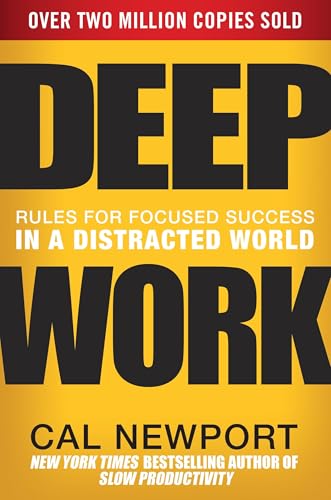
Deep Work
Cal Newport
Rules for focused success in a distracted world. Essential reading for any writer who struggles to find time and focus.
Affiliate link — we may earn a small commission at no extra cost to you.
Sponsored
Frequently Asked Questions
Ready to understand your writing voice?
MyAuthorVoice generates structured reports — Path, Expansion, and Blueprint — that give you a clear picture of your creative identity, thematic range, and writing architecture.
Keep reading
Advertisement
Get writing insights in your inbox
New articles on voice, craft, and creative identity — no noise, no upsells.
As an Amazon Associate and Bookshop.org affiliate, MyAuthorVoice earns from qualifying purchases at no extra cost to you. Bookshop.org supports independent bookstores.
Sponsored
This site was created by Manus AI — an autonomous agent that builds full-stack apps, writes content, and runs workflows without writing a single line of code yourself.
Try Manus Free →