How Your Tolerance for Ambiguity Shapes Your Fiction: A 2026 Guide for Serious Writers
MyAuthorVoice Editorial
Writing craft & author identity
Your tolerance for ambiguity, or your comfort level with uncertainty, complexity, and lack of clear-cut answers, profoundly influences whether your natural inclination leans toward writing literary or commercial fiction. This inherent psychological trait dictates not only the types of stories you gr
How Your Tolerance for Ambiguity Shapes Your Fiction: A 2026 Guide for Serious Writers
Your tolerance for ambiguity, or your comfort level with uncertainty, complexity, and lack of clear-cut answers, profoundly influences whether your natural inclination leans toward writing literary or commercial fiction. This inherent psychological trait dictates not only the types of stories you gravitate towards but also the narrative structures, character arcs, and thematic depths you are most compelled to explore.
Table of Contents
- Defining Literary and Commercial Fiction: More Than Just Sales Figures
- The Spectrum of Ambiguity: From Explicit to Implied
- How Tolerance for Ambiguity Manifests in Narrative Choices
- Crafting for Clarity vs. Cultivating Complexity: A Writer's Approach
- Finding Your Fit: A Framework for Self-Assessment
- Embracing Your Natural Inclination for Authentic Storytelling
Defining Literary and Commercial Fiction: More Than Just Sales Figures
Before delving into the psychological underpinnings, it's crucial to establish a clear understanding of what distinguishes literary fiction from commercial fiction. While sales figures and market appeal often serve as convenient, albeit superficial, markers, the true distinctions lie in their core intentions, narrative priorities, and the reader experience they aim to cultivate. These are not rigid categories but rather a spectrum, with many works exhibiting qualities of both. However, understanding their archetypal forms helps us frame the discussion around ambiguity.
Literary fiction, at its heart, often prioritizes artistic expression, thematic depth, and psychological exploration over plot-driven momentum. Its aim is frequently to provoke thought, challenge perceptions, and delve into the complexities of the human condition, often without offering easy answers or neat resolutions. The prose itself is often a character, carefully crafted, rich in metaphor, and designed to evoke specific moods and intellectual engagement. Characters in literary fiction are typically complex, flawed, and undergoing internal transformations, their journeys often more about self-discovery or grappling with existential questions than achieving external goals. The narrative structure might be non-linear, fragmented, or experimental, reflecting the intricate and often ambiguous nature of reality itself. Readers of literary fiction often seek an immersive, reflective experience, valuing insight and intellectual stimulation as much as, if not more than, pure entertainment.
Commercial fiction, conversely, tends to prioritize accessibility, entertainment, and a strong, engaging plot. Its primary goal is often to deliver a satisfying reading experience, typically characterized by clear stakes, identifiable protagonists, and a compelling narrative arc that moves toward a resolution. While commercial fiction can certainly explore profound themes and develop complex characters, these elements usually serve the overarching purpose of advancing the plot and maintaining reader engagement. The prose is typically direct, efficient, and designed to propel the reader forward. Genres like thrillers, romance, fantasy, and science fiction often fall under the commercial umbrella, each with its own established conventions and reader expectations. Characters are often aspirational or relatable, facing clear external conflicts that drive the story. The narrative structure is usually linear and well-paced, providing a sense of momentum and often culminating in a clear, if not always happy, ending. Readers of commercial fiction often seek escapism, excitement, and the gratification of a well-told story with a discernible conclusion.
The distinction is not about inherent quality—both forms can be masterfully executed or poorly rendered. Rather, it's about the fundamental contract between author and reader, and the implicit promises made about the journey ahead. A writer's natural disposition towards ambiguity plays a significant role in which of these contracts they are most comfortable fulfilling.
The Spectrum of Ambiguity: From Explicit to Implied
Ambiguity in fiction operates on a broad spectrum, ranging from overt, intentional uncertainty to subtle, implied nuances that invite reader interpretation. Understanding where a writer naturally falls on this spectrum is key to discerning their inherent leanings toward literary or commercial forms. This isn't about avoiding clarity, but about how much clarity is deemed necessary or desirable for the story's purpose.
At one end of the spectrum, we find explicit ambiguity. This is where the author deliberately withholds information, presents conflicting perspectives without resolution, or leaves key questions unanswered. The ending might be open-ended, the motivations of characters might remain opaque, or the nature of reality within the story might be called into question. This approach often forces the reader to actively participate in constructing meaning, to sit with discomfort, and to gra
Advertisement
As an Amazon Associate and Bookshop.org affiliate, MyAuthorVoice earns from qualifying purchases at no extra cost to you. Bookshop.org supports independent bookstores.
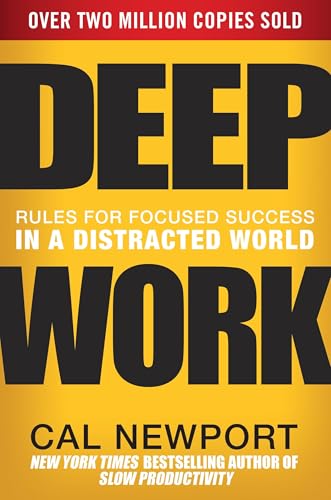
Deep Work
Cal Newport
Rules for focused success in a distracted world. Essential reading for any writer who struggles to find time and focus.
Affiliate link — we may earn a small commission at no extra cost to you.
Sponsored
Frequently Asked Questions
Ready to understand your writing voice?
MyAuthorVoice generates structured reports — Path, Expansion, and Blueprint — that give you a clear picture of your creative identity, thematic range, and writing architecture.
Keep reading
Advertisement
Get writing insights in your inbox
New articles on voice, craft, and creative identity — no noise, no upsells.

As an Amazon Associate and Bookshop.org affiliate, MyAuthorVoice earns from qualifying purchases at no extra cost to you. Bookshop.org supports independent bookstores.
Sponsored
This site was created by Manus AI — an autonomous agent that builds full-stack apps, writes content, and runs workflows without writing a single line of code yourself.
Try Manus Free →