Signs You Are Meant to Write a Book — But Haven't Started Yet: Your Ultimate Guide
MyAuthorVoice Editorial
Writing craft & author identity
Many aspiring authors feel an undeniable pull towards writing a book, a persistent whisper that suggests a larger story or message needs to be shared, yet they haven't taken the definitive step to begin. This internal compass, often manifesting as a deep-seated desire, recurring ideas, or a unique p
Signs You Are Meant to Write a Book — But Haven't Started Yet: Your Ultimate Guide
Many aspiring authors feel an undeniable pull towards writing a book, a persistent whisper that suggests a larger story or message needs to be shared, yet they haven't taken the definitive step to begin. This internal compass, often manifesting as a deep-seated desire, recurring ideas, or a unique perspective on life, signals a profound connection to the act of creation and the potential for literary contribution. Recognizing these signs is the first step toward embracing your authorial destiny and transforming intention into tangible prose.
Table of Contents
- The Persistent Call: Why Some Stories Demand to Be Told
- Recognizing the Authorial Impulse: Key Indicators You're a Writer
- Overcoming the Inertia: Practical Steps to Begin Your Book
- The Unique Perspective: How Your Voice Shapes Your Narrative
- The Unwritten Legacy: Why Delaying Your Book Has Consequences
- Navigating the Blank Page: Tools and Mindsets for the Aspiring Author
- The Transformative Power of Starting: From Idea to Manuscript
- Ready to Understand Your Writing Voice?
The Persistent Call: Why Some Stories Demand to Be Told
For many, the idea of writing a book isn't a fleeting thought but a persistent, almost nagging sensation that refuses to dissipate. It's a quiet hum beneath the surface of daily life, a recurring dream, or a sudden flash of inspiration that suggests there's a narrative within you waiting to be excavated. This isn't merely a desire for accomplishment, though that can certainly be part of it; rather, it’s often a deeper, more intrinsic urge to communicate, to explore, or to articulate something that feels uniquely yours. This "persistent call" is one of the most significant signs that you are meant to write a book, even if you haven't yet put pen to paper or fingers to keyboard.
Consider the nature of this call. Is it a specific story idea that keeps replaying in your mind, demanding resolution? Perhaps it's a particular theme or philosophical question that you find yourself returning to again and again, feeling an urgent need to delve into its complexities. Or maybe it's a sense that you possess a unique perspective or experience that could genuinely benefit others, offering insight, comfort, or a new way of seeing the world. This isn't about ego; it’s about a profound sense of responsibility to the ideas that have taken root within you. These ideas aren't just passing fancies; they are often the fertile ground from which compelling narratives grow, waiting for the right moment—and the right person—to bring them to fruition.
Many writers describe this phenomenon as if the story itself has chosen them, rather than the other way around. It feels less like an invention and more like a discovery, a process of uncovering something that already exists in a nascent form within their consciousness. This feeling can be both exhilarating and daunting. Exhilarating because it promises a journey of creation and self-expression; daunting because it implies a significant undertaking, one that requires dedication, vulnerability, and a willingness to confront the blank page. Yet, ignoring this call often leads to a subtle but persistent sense of unfulfillment, a feeling that a vital part of your potential remains untapped. Embracing it, however, opens the door to a profound creative experience and the possibility of leaving a lasting mark on the world through your words.
Recognizing the Authorial Impulse: Key Indicators You're a Writer
Beyond the persistent call, there are several concrete indicators that suggest you possess the inherent qualities of a writer, even if you haven't yet formalized that identity by writing a book. These aren't necessarily about talent in the traditional sense, but about a particular way of engaging with the world and processing experiences. Recognizing these traits can serve as powerful affirmation, helping you bridge the gap between aspiration and action.
One primary sign is a deep-seated curiosity about people, places, and ideas. Writers are often keen observers, fascinated by the nuances of human behavior, the intricacies of social dynamics, and the underlying motivations that drive actions. You might find yourself analyzing conversations, dissecting situations, or pondering "what if" scenarios long after they've occurred. This isn't just idle rumination; it's the raw material of storytelling, the constant gathering of data that informs character, plot, and theme. This observational tendency often extends to a profound empathy, allowing you to step into the shoes of others and understand their perspectives, a crucial skill for crafting believable characters and engaging narratives.
Another strong indicator is a natural inclination towards introspection and reflection. Writers often process their own experiences and emotions through an internal narrative, seeking to understand the "why" behind events. You might keep a journal, write long emails, or simply spend a lot of time thinking about your life's trajectory, your beliefs, and your place in the world. This self-awareness isn't just for personal growth; it's the wellspring of authentic voice and thematic depth. It allows you to draw upon your own emotional landscape to infuse your writing with genuine feeling and relatable human experience. This inner world, rich with thought and emotion, is a powerful resource for any aspiring author.
Finally, a love for stories in all their forms—books, films, plays, even anecdotes shared among friends—is a classic sign. You don't just consume stories; you analyze them, appreciating their structure, character arcs, and thematic resonance. You might find yourself thinking about how a particular scene was crafted, or what made a character so compelling. This deep engagement with narrative isn't passive entertainment; it's an apprenticeship, a subconscious learning process that hones your understanding of what makes a story work. This appreciation for the craft, coupled with a desire to contribute to it, strongly suggests that you are meant to write your own.
Case Study: Eleanor, a retired history teacher — Before feeling a persistent urge to share untold stories from her local community's past. After attending a local writing workshop and connecting with other aspiring authors, she began outlining a historical fiction novel, finally giving shape to the narratives that had long resided in her mind.
Overcoming the Inertia: Practical Steps to Begin Your Book
The journey from aspiring author to published writer is often stalled not by a lack of ideas or talent, but by the sheer inertia of beginning. The blank page can be intimidating, and the enormity of a book project can feel overwhelming. However, breaking down the process into manageable steps can transform this daunting task into an achievable goal. Overcoming inertia requires a shift in mindset and a commitment to consistent, small actions.
Step 1: Define Your Core Idea
Before you write a single word, clarify what your book is truly about. This isn't about plotting every detail, but identifying the central premise, the core conflict, or the main message you wish to convey. For fiction, this might be a character's journey or a specific "what if" scenario. For non-fiction, it's your central argument or the problem you aim to solve for your reader. Write a one-sentence "logline" or a short paragraph summary. This clarity will serve as your compass throughout the writing process, helping you stay focused and ensuring every word contributes to your overarching goal.
Step 2: Outline, Don't Over-Outline
Many writers get stuck trying to create a perfect, exhaustive outline before writing. Instead, aim for a flexible framework. For fiction, this could be a basic three-act structure, a character arc, or a sequence of key plot points. For non-fiction, it might be a chapter-by-chapter breakdown of your arguments or topics. The goal is to provide enough structure to guide you, but enough flexibility to allow for discovery and evolution as you write. Think of it as a roadmap, not a rigid itinerary. This initial structure helps to demystify the project and makes the task feel less like scaling a mountain and more like following a trail.
Step 3: Establish a Consistent Writing Habit
This is perhaps the most crucial step. Writing a book is a marathon, not a sprint. Instead of waiting for large blocks of time or bursts of inspiration, commit to a small, consistent daily or weekly writing practice. This could be 15 minutes a day, 250 words, or one page. The specific metric is less important than the consistency. The act of showing up regularly, even when you don't feel like it, builds momentum and reinforces your identity as a writer. It trains your brain to enter creative mode and gradually accumulates words into pages, and pages into chapters. This habit also helps to reduce the psychological barrier of starting each time, making the process feel more natural and less like a monumental effort.
Step 4: Prioritize Progress Over Perfection
The pursuit of perfection is often the enemy of completion. Especially in the early stages, your primary goal should be to get the story or argument down on paper. This means embracing the "shitty first draft" philosophy. Don't edit as you go; don't worry about grammar, spelling, or finding the perfect turn of phrase. Simply focus on capturing your ideas. Editing and refining come much later. By separating the creative act of drafting from the critical act of editing, you free yourself to generate content without the paralyzing fear of inadequacy. This iterative approach allows you to build momentum and achieve a complete manuscript, which is a far more tangible accomplishment than a perfectly polished but unfinished first chapter.
The Unique Perspective: How Your Voice Shapes Your Narrative
Every writer possesses a unique perspective, a particular lens through which they view the world, and this perspective is the bedrock of their authorial voice. Recognizing and cultivating this uniqueness is not merely an aesthetic choice; it is fundamental to crafting a narrative that resonates authentically and stands apart. Your voice is the invisible force that shapes your narrative, influencing everything from sentence structure and word choice to thematic depth and emotional tone.
Consider how your personal experiences, your cultural background, your education, and even your personality have shaped your understanding of life. These elements coalesce to form a distinct worldview, and when you write, this worldview naturally infuses your prose. For example, a writer who grew up in a bustling urban environment might naturally gravitate towards fast-paced narratives with complex social dynamics, using sharp, observational language. In contrast, someone raised in a quiet, rural setting might imbue their work with a sense of natural rhythm, contemplative introspection, and vivid descriptions of the landscape. Neither is inherently better; both are authentic expressions of a unique perspective.
The challenge, and indeed the art, lies in allowing this inherent perspective to emerge naturally rather than trying to force a particular style. Many aspiring writers fall into the trap of imitating authors they admire, believing that adopting a successful voice will lead to their own success. While learning from others is valuable, true authorial voice stems from within. It’s about being honest on the page, allowing your genuine thoughts, feelings, and way of expressing yourself to come through. This often means embracing your quirks, your particular turns of phrase, and even your vulnerabilities. When you write from this place of authenticity, your narrative gains a depth and resonance that cannot be faked.
Developing your unique perspective into a strong authorial voice is an ongoing process. It involves deep self-reflection and a willingness to experiment. Platforms like MyAuthorVoice can be instrumental in this journey, offering structured reports that analyze your creative identity and help you understand your unique writing architecture. By providing insights into your thematic range and stylistic tendencies, these tools can illuminate the distinctive qualities of your voice, helping you to consciously lean into what makes your writing uniquely yours. Ultimately, your unique perspective isn't just what you write about, but how you write about it, and it's the most powerful tool you have for connecting with readers on a profound level.
The Unwritten Legacy: Why Delaying Your Book Has Consequences
The decision to postpone writing a book often feels benign, a matter of timing or prioritizing other demands. However, for those who are truly meant to write, delaying this creative endeavor carries significant, albeit often subtle, consequences that extend beyond the mere absence of a published manuscript. The unwritten book represents not just a missed opportunity for literary contribution, but a potential void in personal fulfillment, a lingering sense of unexpressed potential, and a lost connection with an audience waiting for your unique message.
One of the most profound consequences is the erosion of creative momentum and self-belief. Each day that passes without action reinforces the narrative that you are not a writer, or that your story isn't important enough to be told. This internal dialogue can become a self-fulfilling prophecy, making it increasingly difficult to start as the mental barriers grow stronger. The initial spark of inspiration, which felt so urgent and vibrant, can dim over time, replaced by doubt and regret. This isn't just about losing an idea; it's about losing faith in your own capacity for creation and expression, which can spill over into other areas of your life.
Furthermore, delaying your book means denying your potential readers the benefit of your insights, experiences, or imaginative worlds. Every story has an audience, and your unique perspective might be precisely what someone else needs to hear, to understand, or to escape into. Whether it's a non-fiction guide offering practical solutions, a memoir providing comfort through shared experience, or a fictional narrative offering new perspectives, your words have the power to impact lives. When you delay, you withhold this potential impact, leaving a gap that only your voice could fill. This unwritten legacy isn't just about fame or recognition; it's about the genuine human connection that literature fosters.
Finally, there's the personal cost of unfulfilled potential. For many, writing is not merely a hobby but a fundamental aspect of their identity and purpose. Suppressing this urge can lead to a pervasive sense of dissatisfaction, a feeling that a significant part of yourself remains unexpressed. It's akin to an artist never touching a canvas or a musician never playing an instrument. The creative impulse, when ignored, doesn't simply disappear; it often manifests as a vague restlessness or a sense of something missing. Embracing the call to write, even if it's daunting, is an act of self-affirmation, a commitment to honoring your deepest creative instincts and leaving a tangible mark on the world.
Navigating the Blank Page: Tools and Mindsets for the Aspiring Author
The blank page, or the empty document on a screen, is often the first and most formidable obstacle for aspiring authors. It represents not just the absence of words, but the vastness of possibility and the pressure of expectation. Navigating this initial hurdle requires more than just inspiration; it demands a strategic mindset and the right tools to transform daunting emptiness into productive space.
One crucial mindset shift is to view the blank page not as a judge, but as an invitation. Instead of seeing it as a space where perfection is demanded, consider it a canvas for exploration, a place where ideas can be freely experimented with, without immediate consequence. This means embracing the concept of the "discovery draft" – writing to find out what your story is, rather than writing to present a finished product. This approach reduces the pressure to be brilliant from the outset and encourages a more playful, less self-critical engagement with the writing process. It allows for mistakes, detours, and revelations, all of which are essential components of creative work.
Another powerful mindset is to focus on process over outcome. When you fixate solely on the finished book, the task can feel overwhelming. Instead, break it down into daily, achievable actions. Your goal for today might simply be to write for 30 minutes, or to outline a single scene, or to brainstorm character names. By celebrating these small victories, you build momentum and reinforce positive habits. This process-oriented thinking helps to demystify the monumental task of writing a book, making it feel like a series of manageable steps rather than an insurmountable leap.
Beyond mindset, specific tools can significantly aid in navigating the blank page. These aren't just about technology, but about methods and resources that streamline the creative process:
| Tool/Method | Purpose | Benefit for Aspiring Authors
Advertisement


As an Amazon Associate and Bookshop.org affiliate, MyAuthorVoice earns from qualifying purchases at no extra cost to you. Bookshop.org supports independent bookstores.
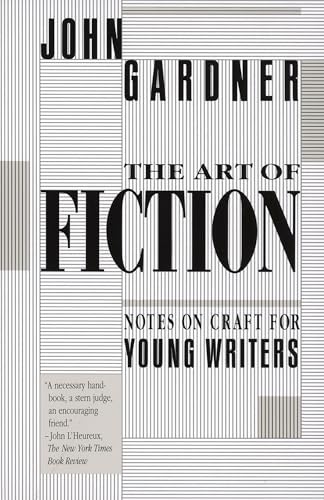
The Art of Fiction
John Gardner
Notes on craft for young writers. A rigorous and inspiring guide to literary technique.
Affiliate link — we may earn a small commission at no extra cost to you.
Sponsored
Ready to understand your writing voice?
MyAuthorVoice generates structured reports — Path, Expansion, and Blueprint — that give you a clear picture of your creative identity, thematic range, and writing architecture.
Keep reading

Advertisement
Get writing insights in your inbox
New articles on voice, craft, and creative identity — no noise, no upsells.

As an Amazon Associate and Bookshop.org affiliate, MyAuthorVoice earns from qualifying purchases at no extra cost to you. Bookshop.org supports independent bookstores.
Sponsored
This site was created by Manus AI — an autonomous agent that builds full-stack apps, writes content, and runs workflows without writing a single line of code yourself.
Try Manus Free →