
Why Writers Who Journal Daily Struggle with Scene Compression: A Deep Dive for Serious Authors
MyAuthorVoice Editorial
Writing craft & author identity
Writers who maintain a daily journaling practice often find themselves grappling with scene compression in their narrative work because journaling cultivates an expansive, detail-oriented, and process-focused mindset that directly contrasts with the conciseness, impact, and outcome-driven nature req
Why Writers Who Journal Daily Struggle with Scene Compression: A Deep Dive for Serious Authors
Writers who maintain a daily journaling practice often find themselves grappling with scene compression in their narrative work because journaling cultivates an expansive, detail-oriented, and process-focused mindset that directly contrasts with the conciseness, impact, and outcome-driven nature required for effective scene compression. This fundamental difference in purpose and practice creates a cognitive friction that can be challenging to overcome without deliberate strategic adjustments.
Table of Contents
- The Divergent Aims of Journaling and Narrative Writing
- The Journaler's Mindset: Expansion Over Economy
- Understanding Scene Compression: Purpose and Practice
- Bridging the Gap: Strategies for Journaling Writers
- The Role of Self-Awareness in Overcoming Compression Challenges
- Refining Your Approach: A Practical Framework
- The Long-Term Benefits of Conscious Compression
- Ready to Understand Your Writing Voice?
The Divergent Aims of Journaling and Narrative Writing
At its core, the struggle many daily journalers face with scene compression stems from a fundamental divergence in the objectives of these two distinct writing practices. Journaling is, by its very nature, an act of unconstrained exploration. It is a space for unfiltered thought, emotional processing, idea generation, and personal reflection. The value lies in the journey of discovery, the cataloging of details, and the unfettered flow of consciousness onto the page. There is no external audience to consider, no plot to advance, and no narrative arc to serve. The goal is often therapeutic, introspective, or simply a means of capturing the ephemeral nature of daily experience. This freedom from external constraints fosters an expansive, additive writing style, where every detail, every tangential thought, feels potentially relevant to the internal landscape being mapped.
Narrative writing, particularly in fiction or compelling non-fiction, operates under an entirely different set of imperatives. Every word, sentence, and paragraph must serve a specific purpose: to advance the plot, develop character, reveal theme, build tension, or establish setting with economy and impact. Scene compression is not merely about shortening a scene; it is about distilling its essence, ensuring that only the most vital information, action, and dialogue remain to propel the story forward. It demands a ruthless critical eye, an ability to identify and excise anything that does not contribute directly to the scene's objective or the overall narrative. For the narrative writer, the audience is paramount, and their engagement is directly tied to the efficiency and effectiveness of the storytelling. The reader's time and attention are finite, and a scene that meanders, repeats, or includes superfluous detail risks losing them entirely.
The cognitive dissonance arises because the muscle memory developed through daily journaling—the habit of allowing thoughts to sprawl, of capturing every nuance without immediate judgment of its narrative utility—is precisely the opposite of the muscle required for effective scene compression. Journaling encourages a "more is more" approach to capture the richness of internal experience, while narrative writing, especially in its polished form, often demands a "less is more" philosophy to maximize impact and maintain pacing. Without a conscious understanding of these differing aims and a deliberate shift in approach when moving from one practice to the other, the journaler will naturally bring the expansive, unedited mindset into their narrative work, leading to scenes that are rich in detail but often lack the necessary drive and focus. This isn't to say journaling is detrimental; rather, it highlights the need for a distinct mental framework when transitioning to the demands of storytelling.
The Journaler's Mindset: Expansion Over Economy
The daily journaling practice cultivates a specific mental landscape that, while immensely beneficial for personal growth and idea generation, can inadvertently hinder scene compression in narrative writing. When a writer journals, they are often engaging in a form of stream-of-consciousness writing. The objective isn't to craft a perfectly structured paragraph or a tightly wound narrative; it's to get thoughts, feelings, observations, and ideas out of the head and onto the page. This process prioritizes quantity and flow over conciseness and impact. Every detail, no matter how seemingly insignificant, might feel important to capture in the moment, contributing to a comprehensive record of internal experience or external observation.
This "expansion over economy" mindset manifests in several ways. Firstly, there's a tendency to include exhaustive descriptive details. If a journaler is recounting an event, they might meticulously describe the color of the sky, the texture of the pavement, the specific scent in the air, and the exact dialogue exchanged, even if much of it is redundant or tangential to the core emotional experience. In a journal, this thoroughness feels authentic and complete. In a novel, it can bog down the pacing and distract from the scene's primary purpose. Secondly, journaling often involves exploring tangents and internal monologues that are not directly relevant to a central plot point. A character's fleeting thought about a past memory or an extended rumination on a philosophical concept might be perfectly at home in a journal entry, but in a narrative scene, such diversions can halt the story's momentum.
Consider the difference between recounting a memory in a journal versus depicting it in a story. In a journal, one might write: "I remember walking down Elm Street last Tuesday. The sun was setting, casting long shadows. It was a peculiar shade of orange, almost like a bruised peach. I was thinking about Sarah and that argument we had last month, wondering if I'd ever truly forgiven her. A dog barked somewhere in the distance, a sharp, insistent sound. I kicked at a loose pebble, watching it skitter across the cracked asphalt. The air was cool, carrying the faint smell of damp earth and exhaust fumes. My shoulders felt heavy." This is rich, evocative, and deeply personal.
Now, imagine trying to integrate that into a narrative scene where the character needs to make a crucial decision. The narrative version would likely compress this: "As dusk settled, painting Elm Street in bruised orange, a familiar heaviness settled on her shoulders. The echo of Sarah's last words, the unresolved argument, still pricked at her, a constant undertow beneath the surface of her thoughts. She kicked a loose pebble, its skittering path mirroring her own restless uncertainty." The core emotional state and its connection to the character's internal conflict are preserved, but the extraneous sensory details and internal tangents are pared away, serving the immediate narrative need. The journaler's instinct, however, would be to retain much of the original, expansive version, believing that all those details contribute to the "reality" of the scene, without fully appreciating that narrative reality is often constructed through careful selection, not exhaustive inclusion.
Understanding Scene Compression: Purpose and Practice
Scene compression is not merely about making a scene shorter; it is a sophisticated narrative technique aimed at maximizing impact, maintaining pacing, and ensuring every element serves the story's overarching purpose. It's about distilling the essence of a moment, focusing on what truly matters to the plot, character development, and thematic resonance, while judiciously omitting or summarizing the rest. For writers, especially those accustomed to the expansive nature of journaling, understanding the why behind compression is as crucial as understanding the how.
The primary purpose of scene compression is to control the reader's experience. A well-compressed scene ensures that the reader's attention is directed precisely where it needs to be. It prevents narrative drag, where unnecessary details or prolonged exposition slow down the story's momentum. Imagine a scene where a character walks from their car to a house. A journaler might describe every step, the feeling of the gravel underfoot, the specific type of shrubbery, the exact number of porch steps. A compressed version would simply state: "She strode to the front door, her heart pounding with anticipation." The journey itself is less important than the character's emotional state upon arrival, and the compression ensures the focus remains on the latter.
Another vital function of compression is to heighten tension and drama. By cutting away extraneous information, the core conflict or emotional stakes of a scene become sharper and more immediate. Consider a tense confrontation. If every pause, every shift in posture, every minor thought is meticulously detailed, the tension can dissipate. When dialogue is crisp, actions are precise, and internal monologues are brief and impactful, the scene crackles with energy. Compression forces the writer to identify the point of the scene – what changes, what is revealed, what decision is made – and then to strip away anything that doesn't directly contribute to that point.
Practically, scene compression involves several techniques. It means summarizing actions or events that are less critical rather than dramatizing them in full. Instead of showing a character driving for thirty minutes, one might write, "The drive across town felt interminable." It means focusing dialogue on essential exchanges, cutting small talk unless it serves character or plot. It involves selecting only the most potent sensory details that evoke atmosphere or character emotion, rather than cataloging every single observation. It also entails identifying and eliminating repetition, whether of ideas, descriptions, or emotional beats. A character doesn't need to explicitly state they are angry if their actions and dialogue clearly convey it.
Case Study: Aspiring Novelist Elena — Struggled with scenes that felt slow and unfocused, often recounting every minute detail of a character's day. After deliberately identifying the single most important plot point or character revelation for each scene and cutting everything else, her manuscript gained significant pace and clarity, with readers praising its engaging flow.
For writers who have cultivated an expansive journaling habit, the practice of compression can feel counterintuitive, almost like sacrificing authenticity for efficiency. However, it is precisely this selective focus that allows the reader to experience the story more profoundly, filling in the gaps with their imagination, rather than being overwhelmed by a deluge of information. It's about trusting the reader to infer, to connect the dots, and to engage actively with the narrative rather than passively receiving an exhaustive report. This requires a shift from a "tell-all" journaling mentality to a "show-what-matters" narrative imperative.
Bridging the Gap: Strategies for Journaling Writers
For writers who regularly journal, transitioning to the disciplined art of scene compression requires conscious effort and specific strategies. The key lies in developing a dual mindset: one for uninhibited exploration and another for focused narrative construction. It's not about abandoning journaling, but about compartmentalizing its expansive tendencies when engaging with narrative work.
One effective strategy is to dedicate specific journaling sessions to narrative exploration rather than pure stream-of-consciousness. Use your journal to brainstorm scene ideas, explore character motivations, or even write a "discovery draft" of a scene without any pressure for conciseness. This allows you to get all the raw material out, much like a sculptor gathering clay. However, when you then move to your narrative manuscript, you approach that raw material with a different lens—the lens of a storyteller, not a documentarian. This means actively asking: "What is the single most important thing this scene needs to accomplish?" and "What can be removed without losing that core purpose?"
Another strategy involves practicing "summary first" writing. Before writing a scene, jot down a one-sentence summary of its objective. For example: "Character A learns a crucial secret from Character B, escalating their conflict." With this objective firmly in mind, every word, action, and piece of dialogue must directly contribute to that summary. Anything that distracts from it, no matter how interesting or well-written, becomes a candidate for removal. This forces a proactive approach to compression, rather than trying to prune an overgrown scene in revision.
Furthermore, writers can benefit from structured revision techniques specifically designed to identify and eliminate narrative bloat. This might involve reading a scene aloud to catch awkward phrasing or slow pacing, or using a "highlighting" method where you mark every sentence that must stay versus those that are merely "nice to have." The "nice to have" sentences are often the first to go in effective compression. It’s a process of ruthless self-editing, a skill that journaling, by its nature, does not cultivate.
| Feature | Journaling Practice | Narrative Scene Compression |
|---|---|---|
| Primary Goal | Self-exploration, idea generation, emotional processing, unfiltered capture | Advance plot, develop character, build tension, convey theme with impact |
| Audience | Self (or no specific audience) | Engaged reader |
| Mindset | Expansive, additive, "more is more" | Selective, subtractive, "less is more" |
| Detail Inclusion | Exhaustive, all-encompassing, tangential exploration | Curated, purposeful, only essential details |
| Pacing | Unconstrained, meandering, reflective | Controlled, dynamic, often fast-paced |
| Focus | Internal experience, process, discovery | External action, outcome, reader engagement |
| Editing Ethos | Minimal or none; authenticity over polish | Rigorous, ruthless; impact over raw completeness |
Finally, consider using your journal as a deliberate space to practice compression exercises. Instead of writing freely, challenge yourself to summarize a complex event from your day in precisely five sentences, or to describe a vivid memory using only sensory details and no exposition. These micro-compression exercises can help build the muscle memory required for more extensive narrative compression. The goal is to train your brain to switch modes, to recognize when the expansive, introspective voice of the journal needs to yield to the focused, impactful voice of the storyteller. This deliberate practice is crucial for bridging the cognitive gap that often plagues journaling writers.
The Role of Self-Awareness in Overcoming Compression Challenges
Overcoming the inherent struggle with scene compression for daily journalers hinges significantly on cultivating a deep sense of self-awareness regarding their writing habits and underlying motivations. Without understanding why they write in a particular way, writers will find it difficult to implement effective changes. This self-awareness extends to recognizing the distinct purposes of journaling versus narrative writing and identifying when the expansive, introspective voice of the journal is bleeding into the more disciplined demands of storytelling.
The first step in this self-awareness journey is to critically examine one's journaling practice. What are the unconscious rules or expectations you bring to your journal? Is it a place where every thought, every detail, must be recorded? Do you feel a compulsion to fully "empty your mind" onto the page? Recognizing these ingrained habits is crucial because they are the very tendencies that will resist compression in your narrative work. For instance, if your journal entries frequently include lengthy descriptions of mundane activities or extended internal monologues that don't lead to a clear conclusion, these are indicators of where your narrative scenes might also become bogged down.
Secondly, writers must become acutely aware of their internal monologue while drafting narrative scenes. Do you find yourself writing details that feel "true" to the moment but don't advance the plot or reveal character in a meaningful way? Are you describing the minutiae of a character's actions or surroundings simply because you can visualize them, rather than because they serve a narrative function? This is the journaler's instinct at play, prioritizing comprehensive depiction over narrative efficiency. A writer might describe a character's elaborate breakfast routine in detail because they imagine it clearly, even if the scene's actual purpose is to establish a tense conversation with a family member. The self-aware writer would recognize this descriptive indulgence and question its necessity.
Case Study: Mystery Author Marcus — Found his early drafts were often bloated with backstory and character introspection that slowed down the plot. After using an author voice platform to analyze his creative identity and thematic range, he realized his natural inclination was towards deep psychological exploration. He then consciously separated his "discovery writing" (journaling-like exploration) from his "narrative writing" (focused on plot and external conflict), leading to tighter, more suspenseful prose.
Developing this self-awareness often involves a reflective practice. After writing a scene, take a moment to step back and ask: "What was the most important thing that happened here?" Then, review the scene to see if every sentence contributes to that "most important thing." If not, why was it included? Was it a habit of exhaustive detail? A fear of leaving something out? An attachment to a particularly well-phrased but ultimately superfluous sentence? This kind of metacognition—thinking about your thinking process as a writer—is invaluable. It allows you to identify the specific triggers and habits that lead to over-expansion and to consciously override them when necessary. Platforms like MyAuthorVoice, which help writers understand their creative identity and writing architecture through structured reports, can be particularly useful in fostering this level of self-awareness, offering insights into your natural tendencies and how they might impact different aspects of your craft. It’s about understanding your unique writing identity and then strategically deploying it.
Refining Your Approach: A Practical Framework
For writers who journal daily and struggle with scene compression, a structured framework can provide the necessary discipline to bridge the gap between expansive exploration and concise storytelling. This isn't about abandoning the valuable practice of journaling, but about developing a conscious methodology for when and how to apply different writing mindsets.
Step 1: Define Scene Objective
Before writing a single word of a narrative scene, clearly articulate its core objective. What must happen in this scene? What information must be conveyed? What character development must occur? What plot point must be advanced? Write this objective down in a single, declarative sentence. For example: "The protagonist discovers the antagonist's true motive, leading to a direct confrontation." Or: "The character makes a life-altering decision based on new information." This objective serves as your compass, guiding every subsequent choice.
Step 2: Draft Expansively (Journaler's Instinct)
Allow yourself a "discovery draft" where you lean into your journaler's instinct. Write the scene without immediate concern for conciseness. Include all the details, internal monologues, tangents, and sensory observations that come to mind. Get everything out onto the page. This honors your natural writing flow and ensures you don't stifle creativity in the initial phase. Think of this as generating the raw material, the rich clay you'll later sculpt.
Step 3: Identify Core Narrative Elements
Once the expansive draft is complete, step away for a short break. When you return, read the scene specifically looking for the elements that directly serve your defined scene objective. Highlight or underline:
- Crucial dialogue that advances plot or reveals character.
- Actions that directly impact the story.
- Sensory details that are essential for atmosphere or character emotion.
- Internal thoughts that directly lead to a decision or reveal a key motivation. Ignore anything that doesn't fit these criteria for now.
Step 4: Compress and Condense
Now, with your highlighted core elements in mind, begin the process of compression.
- Summarize: Can a lengthy description of a journey be condensed to a single sentence? Can a detailed explanation of backstory be summarized in a brief, impactful line of dialogue or internal thought?
- Eliminate Redundancy: Cut repeated information, actions, or emotional beats. If a character's anger is evident in their dialogue, you don't need to explicitly state, "He felt a surge of anger."
- Focus Dialogue: Trim small talk. Ensure every line of dialogue serves a purpose: revealing character, advancing plot, or building tension.
- Show, Don't Tell (Selectively): While journaling often tells, narrative compression demands showing. But be selective. Choose the most potent actions or sensory details to show, rather than all of them.
- Check Pacing: Read the compressed scene aloud. Does it move efficiently? Are there any lingering sections that slow the momentum without adding essential value?
Step 5: Review Against Objective
Finally, compare your compressed scene against the objective you defined in Step 1. Does the scene effectively achieve that objective? Is there anything missing? Is there anything still present that doesn't contribute to the objective? This final review ensures that your compression efforts have served the story's purpose, rather than simply making the scene shorter for its own sake. This iterative process of expansion and ruthless compression allows journalers to leverage their natural strengths while developing the critical skills necessary for compelling narrative.
The Long-Term Benefits of Conscious Compression
Embracing conscious scene compression, particularly for writers who naturally lean towards expansive journaling, offers profound and lasting benefits that extend far beyond simply shortening a manuscript. This deliberate practice refines a writer's craft, sharpens their narrative instincts, and ultimately elevates the quality and impact of their storytelling. It transforms a potential weakness into a significant strength, allowing the writer to harness the richness of their internal world without sacrificing narrative drive.
One of the most significant long-term benefits is the development of a heightened sense of narrative purpose. When a writer consistently asks, "What is the point of this scene?" and "Does every word contribute to that point?", they cultivate an acute awareness of storytelling mechanics. This isn't just about editing; it's about a fundamental shift in how one approaches drafting. Future scenes are often conceived with a clearer objective from the outset, reducing the amount of extraneous material generated in the first place. This leads to more efficient drafting and a stronger sense of direction throughout the writing process.
Furthermore, conscious compression fosters a deeper trust in the reader. By learning to omit non-essential details, writers empower their audience to engage more actively with the text, filling in the gaps with their own imagination and interpretation. This collaborative aspect of storytelling creates a more immersive and satisfying reading experience. Instead of being spoon-fed every minute detail, readers become partners in constructing the narrative world, which deepens their emotional investment. This trust also extends to the writer's own voice; they learn to trust that their carefully selected details and precise language are sufficient to convey the intended meaning and emotion. Understanding your unique author voice platform can further solidify this trust, as you learn to wield your particular strengths with intention.
Case Study: Fantasy Writer Liam — Struggled with world-building descriptions that overwhelmed his readers and slowed his plot. After implementing a "show, don't tell, but only show what matters" approach, his world-building became integrated seamlessly into the narrative, enhancing immersion without sacrificing pace.
The discipline of compression also hones a writer's ability to identify and amplify emotional beats. When superfluous details are stripped away, the core emotions and conflicts of a scene stand out in stark relief. This allows for greater emotional resonance, as the reader is not distracted by tangential information. The impact of a character's grief, joy, or terror is magnified when the narrative focuses laser-like on those feelings, expressed through precise actions, dialogue, and internal thought, rather than being diluted by excessive exposition.
Finally, consistent practice in scene compression leads to a more polished and professional manuscript. Agents and editors often cite pacing issues and narrative bloat as common reasons for rejection. A writer who has mastered compression presents a manuscript that is tight, engaging, and demonstrates a clear understanding of storytelling craft. This not only increases the chances of publication but also establishes the writer as a skilled artisan of words, capable of delivering a compelling and efficient narrative experience. The journey from expansive journaler to concise storyteller is one of growth, discipline, and ultimately, greater narrative power.
📚 Recommended: Write. Publish. Repeat. by Sean Platt and Johnny B. Truant — This book emphasizes efficiency and strategic writing, offering a mindset that can help balance expansive creativity with commercial viability. Amazon link
📚 Recommended: Scrivener 3 by Literature & Latte — A powerful writing software that helps organize complex projects, making it easier to structure, outline, and compress scenes by allowing easy rearrangement and focused views. Amazon link
FAQ Section
Q: Is journaling inherently bad for narrative writing? A: No, journaling is not inherently bad. It's an excellent tool for idea generation, emotional processing, and exploring your creative voice. The challenge arises when the expansive, unfiltered mindset of journaling is inadvertently applied to narrative writing, which requires conciseness and purpose.
Q: How can I tell if my scenes are suffering from a lack of compression? A: Signs include slow pacing, readers getting lost in details, scenes feeling unfocused, or a sense that nothing significant is happening. If you find yourself describing every mundane action or thought, your scene likely needs compression.
Q: Should I stop journaling if I want to improve scene compression? A: Absolutely not. Instead, practice compartmentalization. Use your journal for its intended purpose of exploration, but consciously switch to a more critical, purpose-driven mindset when working on your narrative drafts.
Q: Can scene compression make my writing feel sterile or lacking detail? A: Effective scene compression is about selective detail, not a complete absence of it. The goal is to choose the most impactful details that serve the story, rather than including every single one. This makes the chosen details more potent.
Q: What's the difference between summarizing and compressing a scene? A: Summarizing often involves telling the reader what happened, while compression involves showing only the most vital parts of what happened, allowing the reader to infer the rest. Compression maintains the scene's dramatic tension and immersion.
Q: How does understanding my author voice help with compression? A: Understanding your author voice, as revealed by a writing identity report, helps you recognize your natural tendencies—whether you're an expansive explorer or a concise architect. This self-awareness allows you to consciously adapt your approach to meet the demands of scene compression without losing your unique style.
Q: Are there any tools that can help me identify areas for compression? A: Reading your work aloud, having beta readers, and using editing software that highlights wordiness or repetitive phrases can be very helpful. Outlining your scenes with clear objectives before writing can also proactively prevent bloat.
Q: How long does it take to master scene compression? A: Like any writing skill, mastering scene compression is an ongoing process that improves with deliberate practice and critical self-assessment. It's less about a fixed timeline and more about consistent effort and a willingness to revise ruthlessly.
Ready to Understand Your Writing Voice?
The journey from expansive journaler to master of scene compression is a profound one, requiring not just technical skill but deep self-awareness. If you're ready to understand the unique contours of your creative identity, thematic range, and writing architecture, MyAuthorVoice offers structured AI-generated reports designed for serious writers. Explore your Path report to uncover your core creative identity, delve into your Expansion report for thematic insights, or refine your execution with the Blueprint report. Take the intake today and begin a new chapter in your writing journey.
Advertisement

As an Amazon Associate and Bookshop.org affiliate, MyAuthorVoice earns from qualifying purchases at no extra cost to you. Bookshop.org supports independent bookstores.
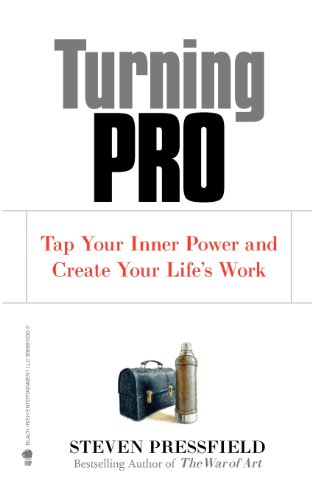
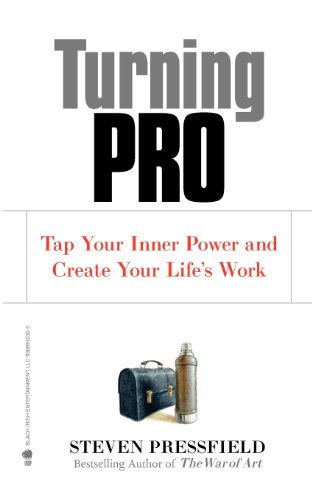
Turning Pro
Steven Pressfield
The companion to The War of Art. How to shift from amateur to professional and show up for your creative work every day.
Affiliate link — we may earn a small commission at no extra cost to you.
Sponsored
Frequently Asked Questions
Ready to understand your writing voice?
MyAuthorVoice generates structured reports — Path, Expansion, and Blueprint — that give you a clear picture of your creative identity, thematic range, and writing architecture.
Keep reading
Advertisement
Get writing insights in your inbox
New articles on voice, craft, and creative identity — no noise, no upsells.

As an Amazon Associate and Bookshop.org affiliate, MyAuthorVoice earns from qualifying purchases at no extra cost to you. Bookshop.org supports independent bookstores.
Sponsored
This site was created by Manus AI — an autonomous agent that builds full-stack apps, writes content, and runs workflows without writing a single line of code yourself.
Try Manus Free →