
Why Your Most Authentic Writing Happens When You Are Slightly Bored
MyAuthorVoice Editorial
Writing craft & author identity
The most authentic writing often emerges not from intense pressure or overflowing inspiration, but from a state of gentle, unforced boredom. This seemingly unproductive mental space allows the mind to disengage from external stimuli and superficial distractions, clearing a path for deeper thoughts,
Why Your Most Authentic Writing Happens When You Are Slightly Bored
The most authentic writing often emerges not from intense pressure or overflowing inspiration, but from a state of gentle, unforced boredom. This seemingly unproductive mental space allows the mind to disengage from external stimuli and superficial distractions, clearing a path for deeper thoughts, dormant ideas, and the true creative identity to surface and take shape on the page.
Table of Contents
- The Paradox of Productivity: Why Idleness Fuels Authenticity
- Understanding the Boredom Threshold: From Stagnation to Serendipity
- The Neuroscience of Daydreaming: How the Default Mode Network Unlocks Creativity
- Cultivating Productive Boredom: A Framework for Writers
- The Dangers of Constant Stimulation: Why We Lose Our Voice in the Noise
- Boredom vs. Writer's Block: Distinguishing Productive Lulls from Creative Stagnation
- Integrating Boredom into Your Writing Practice for Lasting Authenticity
The Paradox of Productivity: Why Idleness Fuels Authenticity
In an era obsessed with constant productivity, optimization, and the relentless pursuit of "flow states," the idea that boredom could be a catalyst for authentic writing might seem counterintuitive. We are conditioned to believe that our best work arises from focused effort, from the deliberate application of will to a task. Yet, many experienced writers will attest to moments of profound insight emerging not during intense work sessions, but during quiet lulls: a long walk, a mundane chore, or simply staring out a window. This isn't laziness; it's the mind performing a different, equally vital kind of work.
Authenticity in writing is not merely about recounting personal experiences; it's about channeling a unique perspective, a distinct voice, and an underlying truth that resonates with both the writer and the reader. This deep well of authenticity is often obscured by the demands of daily life, the pressure to conform, or the sheer volume of external information we consume. When we are constantly engaged – whether by work, social media, entertainment, or even highly structured creative tasks – our minds operate primarily in a reactive mode. We process, respond, and execute. This mode is excellent for efficiency but less so for introspection and genuine originality.
Boredom, particularly the mild, undirected kind, acts as a mental palate cleanser. It strips away the immediate demands and distractions, creating a void. Nature abhors a vacuum, and the human mind is no exception. In this void, the subconscious begins to stir. Ideas that were nascent, connections that were unmade, and emotions that were unexamined start to float to the surface. It’s in these moments of quiet internal exploration that a writer’s true voice, unburdened by external expectations or the need to perform, can emerge. This isn't about being completely disengaged; it's about being disengaged from external stimuli to allow for deeper internal engagement. The resulting writing often feels more raw, more honest, and more uniquely "you" because it hasn't been filtered through the usual conscious, critical, or externally-driven processes. It's a direct channel to the creative core that MyAuthorVoice aims to help writers understand and articulate through its structured reports on creative identity and voice.
Understanding the Boredom Threshold: From Stagnation to Serendipity
Not all boredom is created equal, and understanding its nuances is crucial for harnessing its power for authentic writing. There's a spectrum, ranging from debilitating ennui to a fertile, gentle disengagement. The key is to navigate this "boredom threshold" effectively, moving beyond mere stagnation into a space of creative serendipity.
At one end of the spectrum lies profound, soul-crushing boredom – the kind that leads to apathy, listlessness, and a complete lack of motivation. This state is rarely productive for writing, as it often signals a deeper issue, such as burnout, lack of purpose, or even depression. It’s characterized by a feeling of being trapped, with no internal or external escape. This is not the boredom we seek.
The productive boredom, the kind that unlocks authentic writing, resides in a more subtle, transient state. It's the feeling of having nothing immediate or pressing to do, but without the accompanying sense of despair. It's the quiet hum of the mind when it's not being actively directed, when the usual inputs have ceased, and the internal landscape becomes the primary focus. Think of waiting in a slow-moving line, sitting on a long train journey without a screen, or doing a repetitive, low-cognitive-load task like washing dishes or folding laundry.
This gentle boredom acts as a signal to the brain: "Okay, the external world isn't demanding my full attention right now. What else is there?" This is when the mind begins to wander, to make connections between disparate ideas, to revisit old memories, or to play out hypothetical scenarios. It's in this undirected wandering that the seeds of authentic writing are often sown. The mind, freed from the pressure to produce a specific outcome, can explore its own depths, uncovering unique perspectives, turns of phrase, and emotional truths that might otherwise remain buried. It's a state of receptive openness, where the writer becomes a conduit for ideas rather than a forced generator of them. Recognizing and cultivating this specific type of boredom is a skill, one that involves resisting the urge to immediately fill every quiet moment with digital stimulation or external tasks.
The Neuroscience of Daydreaming: How the Default Mode Network Unlocks Creativity
The phenomenon of productive boredom and the authentic writing it fosters is not merely anecdotal; it has a basis in neuroscience, particularly in the activity of what scientists call the Default Mode Network (DMN). This network of interacting brain regions becomes most active when we are not focused on the outside world or engaged in a specific task – essentially, when we are daydreaming, mind-wandering, or, yes, slightly bored.
When our attention is directed outward, performing tasks like reading, problem-solving, or interacting with our environment, the brain's "task-positive network" is dominant. This network is efficient and goal-oriented, crucial for getting things done. However, when these external demands diminish, the DMN takes over. It's a fascinating neural system involved in self-referential thought, future planning, memory retrieval, and considering the perspectives of others. Crucially for writers, the DMN is also strongly implicated in creative thought and imagination.
During DMN activation, the brain is not "off"; it's engaged in a different kind of processing. It's connecting disparate pieces of information, consolidating memories, simulating scenarios, and essentially performing an internal "search and synthesize" operation. This is why solutions to problems, unexpected plot twists, or perfect metaphors often appear when you're in the shower, on a walk, or just before falling asleep – moments when the DMN is highly active. For a writer, this means that the unique patterns of their thought, their individual way of seeing the world, and the subtle connections that form their creative voice are given space to coalesce. The DMN helps to integrate personal experiences with broader themes, allowing for the kind of deep, resonant writing that feels truly authentic. It's a period of internal incubation, where raw ideas are processed and refined outside of conscious, critical oversight, leading to more original and deeply personal output. Understanding this neural mechanism can empower writers to intentionally schedule periods of "unfocus" to leverage their brain's natural creative architecture.
Cultivating Productive Boredom: A Framework for Writers
Harnessing the power of productive boredom isn't about simply doing nothing; it's about intentionally creating the conditions for your mind to wander in a beneficial way. This requires a shift in perspective and some deliberate practice. Here's a framework to help writers integrate this powerful tool into their creative process:
Step 1: Schedule Unscheduled Time Paradoxically, cultivating productive boredom often begins with scheduling it. In our hyper-connected world, true downtime rarely happens by accident. Block out 15-30 minute periods in your day where you commit to not engaging with screens, books, or demanding tasks. This isn't a break for entertainment; it's a break from external input. Think of it as a mental white space. During this time, you might simply sit, stare out a window, or engage in a repetitive, low-stimulus activity.
Step 2: Embrace Low-Cognitive-Load Activities Engage in tasks that require minimal mental effort but occupy your body or a small part of your attention. Examples include walking without headphones, washing dishes by hand, folding laundry, gardening, knitting, or even simply doodling. These activities keep the conscious mind gently occupied, preventing it from feeling completely adrift, while freeing the subconscious to roam and make connections. The rhythmic nature of these tasks can be particularly conducive to mind-wandering.
Step 3: Resist the Urge to Fill the Void This is perhaps the most challenging step in our modern world. When a moment of quiet arises, our immediate instinct is often to reach for a phone, turn on the TV, or seek out some form of stimulation. Productive boredom requires resisting this urge. Allow the initial discomfort of "nothing to do" to pass. Understand that this momentary emptiness is the gateway to deeper thought. The more you practice this, the easier it becomes to sit with the quiet and observe where your mind naturally goes.
Step 4: Keep a "Wanderings Journal" Handy The insights that emerge from productive boredom can be fleeting. Keep a small notebook or a digital note-taking app easily accessible during your unscheduled time or low-cognitive-load activities. Don't try to force ideas; simply capture any thoughts, images, phrases, or connections that spontaneously arise. These aren't necessarily fully formed plot points or perfect sentences, but rather raw material – the seeds of authentic writing that you can cultivate later. This journal acts as a bridge between your wandering mind and your structured writing practice, ensuring that the ephemeral gifts of boredom aren't lost.
Case Study: Eleanor, the Novelist — Before Eleanor felt constantly overwhelmed by her novel, struggling to find original ideas and feeling her voice was derivative. After she started taking daily 20-minute walks without her phone, allowing her mind to drift, she began to uncover unique character motivations and subtle thematic connections that infused her story with a depth and authenticity she hadn't achieved before.
The Dangers of Constant Stimulation: Why We Lose Our Voice in the Noise
In stark contrast to the benefits of productive boredom, the pervasive culture of constant stimulation poses a significant threat to a writer's authentic voice. We live in an age where every spare moment can be filled with information, entertainment, or social interaction, thanks to the omnipresence of digital devices. While these tools offer undeniable advantages, their relentless demand for our attention can inadvertently erode the very foundation of original thought and genuine expression.
When we are continuously bombarded with external stimuli – notifications, news feeds, endless streams of content – our brains remain in a perpetually reactive state. The task-positive network is constantly engaged, processing incoming data, evaluating, and responding. This leaves little to no room for the Default Mode Network to activate and perform its crucial work of internal synthesis, memory consolidation, and imaginative exploration. The mind becomes a consumer rather than a creator, constantly absorbing external narratives and ideas without sufficient time to process them through its own unique lens.
This constant input can lead to several detrimental effects on a writer's voice. Firstly, it fosters a sense of comparison and imitation. When we are always seeing what others are creating, reading, or discussing, there's an unconscious pressure to conform, to mimic popular styles, or to chase trending topics. This can dilute a writer's unique perspective, making their work feel less distinct and more like an echo of what's already out there. The raw, unfiltered insights that emerge from internal quiet are replaced by polished, externally validated ideas.
Secondly, constant stimulation fragments attention. Deep, sustained thought – the kind required for developing complex characters, intricate plots, or profound thematic explorations – becomes increasingly difficult. The mind is trained to jump from one piece of information to the next, hindering its ability to delve into the nuances of a single idea. This superficial engagement can result in writing that lacks depth, emotional resonance, and the subtle complexities that define a truly authentic voice. The writer may be able to produce words, but those words might lack the unique imprint of their own identity, becoming generic rather than distinctive. To truly understand and express your creative identity, as explored in MyAuthorVoice's Path report, requires stepping away from the noise and listening to your inner landscape.
Boredom vs. Writer's Block: Distinguishing Productive Lulls from Creative Stagnation
It's crucial for writers to differentiate between the productive, gentle boredom that fosters authenticity and the debilitating state of writer's block. While both might manifest as a lack of immediate output, their underlying causes, psychological states, and prescribed solutions are vastly different. Misinterpreting one for the other can lead to frustration and missed creative opportunities.
Let's examine the distinctions:
| Feature | Productive Boredom | Writer's Block |
|---|---|---|
| Feeling | Calm, quiet, slightly undirected, open-ended | Frustrated, anxious, pressured, stuck, empty |
| Mental State | Mind-wandering, daydreaming, internal exploration | Mental blankness, self-criticism, paralysis by analysis |
| Underlying Cause | Lack of external stimulation, mental rest | Fear of failure, perfectionism, burnout, lack of clarity |
| Potential Outcome | New ideas, unexpected connections, authentic voice | Stagnation, avoidance, self-doubt, delayed progress |
| Duration | Often transient, leads to eventual insight | Can be prolonged, feels insurmountable |
| Action Needed | Allow mind to wander, low-stimulus activities | Address underlying fears, change environment, freewrite |
Productive boredom is a state of active internal engagement, even if there's no external activity. The mind is still working, making connections, and processing information, but without the pressure of a specific goal. It's often accompanied by a sense of calm or even pleasant detachment. When you're in this state, ideas might not be flowing directly onto the page, but they are percolating beneath the surface, preparing to emerge. It's a fertile fallow period.
Writer's block, on the other hand, is characterized by a feeling of being genuinely stuck, often accompanied by anxiety, self-doubt, and a sense of creative paralysis. It's not just a lack of external stimulation; it's a lack of internal movement. The mind feels empty, or worse, overwhelmed by critical voices. This often stems from deeper issues: fear of not being good enough, uncertainty about the story's direction, burnout from overwork, or trying to force an idea that isn't ready.
Recognizing the difference allows a writer to respond appropriately. If you're experiencing productive boredom, lean into it. Give your mind the space it needs to wander, trusting that insights will follow. If it's writer's block, a different approach is needed: perhaps freewriting to bypass the inner critic, taking a complete break from writing to recharge, seeking feedback on your work, or revisiting your core thematic range and creative identity, which reports like MyAuthorVoice's Expansion and Path can help clarify. The former is a gentle pause; the latter is a creative roadblock requiring active intervention.
Integrating Boredom into Your Writing Practice for Lasting Authenticity
To truly leverage the power of productive boredom for authentic writing, it must be integrated deliberately into your broader writing practice, not just treated as an occasional accident. This means cultivating a mindset that values internal processing as much as external output, and structuring your time to allow for both.
Firstly, reframe your perception of downtime. Instead of viewing moments of idleness as wasted time or opportunities to be filled, see them as essential incubation periods. Just as a chef allows dough to rise or a gardener lets seeds sprout, writers need periods for ideas to ferment. This mental shift is foundational. Understand that not every moment needs to be "productive" in the traditional sense to be creatively fruitful.
Secondly, design your environment for intentional boredom. This might mean creating a "no-screen zone" in your home, designating certain times of day for device-free activities, or even planning regular "boredom walks" or "boredom chores." The goal is to minimize the automatic reach for external stimulation when quiet moments arise. This could involve leaving your phone in another room while you write, or even while you're simply having a cup of coffee.
Thirdly, pair boredom with a capture mechanism. As discussed in the framework, the insights from boredom can be ephemeral. Always have a notebook, voice recorder, or digital note app within easy reach. The moment a thought, phrase, or connection surfaces during your period of gentle idleness, capture it. Don't judge it; just record it. These fragments are the raw material of authentic writing, often carrying the unique signature of your subconscious.
Finally, reflect on the origins of your ideas. As you review your captured notes and develop them into full pieces, pay attention to where the initial spark came from. Was it during a focused writing session, or did it emerge during a quiet moment of mind-wandering? Over time, you'll likely notice a pattern: many of your most original and authentic ideas will trace back to those periods of productive boredom. This reinforces the value of the practice and encourages its continued integration. By consciously recognizing the source of your most genuine insights, you strengthen your connection to your unique author voice and thematic range, making your writing more consistently authentic.
📚 Recommended: Scrivener 3 by Literature and Latte — This powerful writing software helps organize complex projects, allowing you to easily store notes, research, and those fleeting ideas captured during moments of boredom alongside your manuscript. Amazon link
📚 Recommended: 5,000 Words Per Hour by Chris Fox — While focused on speed, this book also implicitly encourages creating space for ideas to flow, which often happens after periods of mental incubation. Amazon link
8-Question FAQ Section
Q: Is "productive boredom" the same as procrastination? A: No, productive boredom is an intentional state of unfocused mental activity designed to foster creativity, whereas procrastination is the act of delaying a task, often due to fear or lack of motivation. Productive boredom is a deliberate part of the creative process; procrastination is an avoidance of it.
Q: How long should I aim for periods of productive boredom? A: Start with short, manageable periods, perhaps 10-15 minutes, and gradually increase as you become more comfortable. Even short bursts of undirected thought can be beneficial, but 20-30 minutes often allows enough time for the mind to truly disengage and wander productively.
Q: What if I feel truly bored and uninspired, not just slightly bored? A: If boredom feels debilitating or leads to apathy, it might be a sign of burnout or deeper creative block. In such cases, a more significant break, a change of scenery, or addressing underlying anxieties might be more effective than simply trying to "be bored."
Q: Can I listen to music during productive boredom? A: It depends on the music. Instrumental, ambient, or repetitive music without lyrics might be okay for some, as it can provide a gentle background without demanding attention. However, music with lyrics or complex compositions can be too stimulating and prevent the mind from truly wandering. Silence is often best.
Q: Does meditation count as productive boredom? A: While meditation shares some similarities with productive boredom (e.g., quiet, internal focus), its goal is typically to cultivate mindfulness and present-moment awareness, often by observing thoughts without engaging them. Productive boredom, conversely, encourages the mind to wander and make connections. Both are beneficial but serve different purposes.
Q: How do I stop myself from reaching for my phone during these periods? A: Physical distance is key. Leave your phone in another room, turn off notifications, or even put it on airplane mode. Make it inconvenient to access. Over time, as you experience the benefits of productive boredom, the urge to check your phone may diminish.
Q: Can this approach help with writer's block? A: Productive boredom can sometimes help alleviate certain types of writer's block, particularly those stemming from overthinking or trying to force ideas. By allowing the mind to relax and wander, new perspectives or solutions might emerge. However, for deeper blocks related to fear or burnout, more targeted strategies might be needed.
Q: How does this relate to finding my authentic voice? A: When you're slightly bored, your mind is less influenced by external pressures and more attuned to its own unique patterns of thought, memories, and emotions. This internal exploration allows your true creative identity to surface, leading to writing that feels more genuine, personal, and reflective of your unique author voice.
Ready to Understand Your Writing Voice?
The journey to authentic writing is deeply personal, often requiring introspection and a clear understanding of your unique creative identity. If you're ready to delve into the core of your writing self, MyAuthorVoice offers structured reports designed to illuminate your creative voice, thematic range, and writing architecture. Start your journey of self-discovery and unlock your most authentic writing by taking the intake today.
Advertisement

As an Amazon Associate and Bookshop.org affiliate, MyAuthorVoice earns from qualifying purchases at no extra cost to you. Bookshop.org supports independent bookstores.
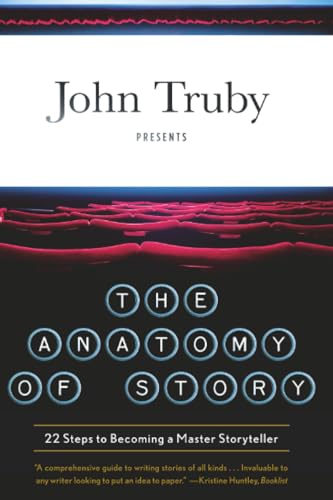
The Anatomy of Story
John Truby
Twenty-two steps to becoming a master storyteller. The most comprehensive guide to story structure available.
Affiliate link — we may earn a small commission at no extra cost to you.
Sponsored
Frequently Asked Questions
Ready to understand your writing voice?
MyAuthorVoice generates structured reports — Path, Expansion, and Blueprint — that give you a clear picture of your creative identity, thematic range, and writing architecture.
Keep reading
Advertisement
Get writing insights in your inbox
New articles on voice, craft, and creative identity — no noise, no upsells.

As an Amazon Associate and Bookshop.org affiliate, MyAuthorVoice earns from qualifying purchases at no extra cost to you. Bookshop.org supports independent bookstores.
Sponsored
This site was created by Manus AI — an autonomous agent that builds full-stack apps, writes content, and runs workflows without writing a single line of code yourself.
Try Manus Free →